Business Continuity Insurance in the Next Disaster

The COVID-19 pandemic triggered an economic shock unparalleled in severity and breadth across the US economy since at least the Great Depression. The spring of 2020 saw unprecedented business closures and revenue declines. The government response was swift and unprecedented in scale. The federal government deployed two novel programs to support small businesses: Paycheck Protection Program (PPP) and the Main Street Lending Program (MSLP). In an AESG report titled “Business Continuity Insurance in the Next Disaster,” economists Samuel Hanson (Harvard Business School), Adi Sunderam (Harvard Business School), and Eric Zwick (Booth School of Business at The University of Chicago) examine the strengths and weaknesses of these programs and draw lessons for future recessionary periods.

The authors highlight the unique features of how the COVID pandemic affected small businesses and draw important lessons from the experiences of the PPP and MSLP. They then examine the economic case for business support, concluding that there was a strong economic case for business support during the crisis, but limited economic justifications for continued assistance during economic recovery. They also describe a proposal for a new program, called Business Continuity Insurance, that could be in place for future recessions.

LESSONS FROM THE 2020 SMALL BUSINESS SUPPORT PROGRAMS: PPP & MSLP
The Paycheck Protection Program (PPP) offered loans to small firms, defined as those with fewer than 500 employees. Firms were eligible for loans up to the minimum of 2.5 months of payroll in normal times and $10 million. Firms applied for PPP loans through private banks, but these low-interest loans were guaranteed by the Small Business Administration. PPP loans would be forgiven if most of the loan proceeds were used to cover eligible payroll and nonpayroll expenses. The extent of forgiveness did not depend on the severity of the shock a firm faced. To the extent the loans were not forgiven, they carried a 1% interest rate with all payments deferred for at least one year and a two-year maturity.

The $600 billion Main Street Lending Program (MSLP) was created by the Federal Reserve and the Department of the Treasury to provide loans of up to $35 million to small- and medium-sized firms. Private banks made loans to qualifying firms, with the MSLP purchasing 95% of the loan and the originating bank retaining 5%. All loans made under the program had a five-year maturity with principal payments deferred for two years and carried an interest rate of LIBOR plus 300 basis points. Firms were generally prohibited from using these loans to prepay or refinance existing debt and were subject to restrictions on executive compensation, dividends, and repurchases.
Both the PPP and MSLP applied broad targeting criteria and both featured delayed repayment. However, the programs differed considerably In the context of loan “softness,” meaning the extent to which repayment would be required in the future. The authors observe that the softer loan terms of the PPP led to a much higher disbursement rate: the PPP dispersed 80% of its allocated funds, as compared to only 3% for the MSLP.

Both programs received allocations of approximately $600 billion in the spring of 2020. The PPP disbursed 80% of these funds in just over three months. In sharp contrast, the MSLP did not begin taking applications until June and expired in December 2020, having distributed just 3% of its allocation. While PPP reached nearly five million borrowers, MSLP issued just over 1,800 loans. Moreover, most of these funds were deployed relatively late in the pandemic in November and December of 2020. The authors thus conclude unequivocally that the impact of MSLP on the economy was limited.

Since the PPP deployed a large amount of funds to nearly five million borrowers, some lessons can be drawn with regard to program design features. The authors highlight several observations:

  1. Eligibility criteria that was too broad and program generosity contributed to very strong loan demand such that the first tranche of funds was exhausted in less than two weeks. More refined program targeting would have improved program effectiveness.
  2. The interaction between scarce initial funds and program deployment through the banking system often allowed larger and more connected borrowers to access the program ahead of others. This raises the question of whether to use private or public entities to distribute support.
  3. The short-term effect of the program on employment was relatively modest, as compared to the size of the program. The authors suggest instead embedding soft repayment terms or conditioned forgiveness on revenue losses to maximize economic efficiency.
  4. There is evidence that some firms used PPP funds to strengthen their balance sheets, so it might be the case that long-term employment impacts will be larger than short term employment impacts observed to date.

RATIONALES FOR SMALL BUSINESS SUPPORT DURING RECESSIONS AND CRISES
Policymakers should ask whether providing financial support to small businesses during a disaster would improve social welfare. In the absence of spillovers or financial frictions, the answer is no. However, the speed, scale, and severity of the COVID-19 pandemic made salient the extent to which frictions existed, necessitating policy intervention.

The authors highlight three types of congestion externalities that can cause significant strains in an economic system. First, there may be spillovers generated by congestion in the bankruptcy process as many firms exhaust their cash reserves and become unable to service their debts and fixed obligations. Second, congestion arises in capital markets when a glut of firms close simultaneously, resulting in rushed business liquidations and fire sales that could create large deadweight societal losses. Third, congestion in the labor market due to mass furloughs and layoffs could prevent workers from finding a new job or reentering the workforce, as well as overwhelming the unemployment insurance (UI) system.

The authors also discuss additional frictions that warrant government support for small businesses—including weakened aggregate demand, frozen capital markets, and tightened bank lending standards—and note that the nature of firm ownership should play a role in potential support targeting.

Finally, the authors observe that many of the market failures that justify business support during the pandemic—such as frictions in capital and labor markets and nominal rigidities in contracts—also justify business support during typical economic recessions, though at lower levels of generosity.

TARGETING AND IMPLEMENTING SMALL BUSINESS SUPPORT IN A DISASTER
In an ideal world, government assistance to businesses during an economic crisis would be optimally targeted toward firms (1) with operations severely affected by the shock; (2) that are unable to smooth the shock on their own; or (3) for which bankruptcies would create substantial spillovers. However, in practice, programs need to minimize administrative burdens and maximize take-up, which requires using relatively simplistic targeting that exploits existing government data.

The authors describe a new program called Business Continuity Insurance, which they proposed in a previous paper co-authored with Jeremy Stein (Harvard University). The design of this proposed policy takes seriously the challenge of targeting business support toward firms with the highest private benefit and social insurance value relative to program cost. The program targets assistance to firms whose operations are severely affected by a current shock, that are unable to smooth the shock on their own, and for which bankruptcies would create substantial spillovers. In this report, they outline key features of such a program.

First, when it comes to implementation, the authors view the key goal of any business support program as helping private firms cover the cost of their fixed and hard-to- renegotiate obligations, with the idea being that these costs would most threaten inefficient firm liquidations and spillover damage to the economy. Their approach is agnostic to the firm’s choice of capital structure (mortgage borrowing vs. rent structures), treats lease equipment and debt more generously because it excludes depreciation and profits, and allows for flexibility in contract negotiations.

Second, support in a noneconomic crisis should include repayment terms that are “soft” (i.e., do not take the form of traditional debt). They note that well-designed repayment terms can help ensure that the only firms applying for assistance will be those that genuinely need help. They also argue that small-business support should be deployed by the IRS for three reasons: first, the IRS has direct access to the corporate tax returns needed to construct a measure of a firm’s fixed obligations; second, the existing IRS enforcement framework for tax evasion could be naturally extended to this program to prevent fraud and abuse; and third, deploying funds through the IRS limits the extent to which frictions might deter private intermediaries from helping firms access socially valuable support.

Finally, the authors emphasize that they view small-business support as a complement to, rather than a substitute for, traditional UI support and expansions of UI during a crisis. Aid to businesses and households should be paired to ensure that once the crisis ends household balance sheets are strong enough to drive a recovery in spending and business balance sheets are strong enough to drive a recovery in employment and investment.

POLICY TOOLS TO PROMOTE RECOVERY
Additional policy tools – beyond business support during a crisis – could be used to promote economic recovery once a crisis has passed. The authors observe that the policy case for small-business support in the wake of a shock is considerably weaker than during the shock, and hence the government should not be as involved in directly providing small business support once the crisis subsides. However, other policy tools could serve two purposes. First, to the extent the crisis generates an aggregate demand shortfall, there is a case for traditional fiscal and monetary policy to close the output gap. Second, and perhaps more relevant in a disaster, there may be a case for promoting reallocation either by socializing startup costs or by taking other steps to facilitate firm entry and exit.

They make two key policy recommendations to promote post-crisis recovery:

  1. Do not indefinitely delay business bankruptcies: For reasons of efficiency, fairness, and fiscal prudence, policymakers should ensure that unavoidable bankruptcy waves play out in an orderly fashion. The authors suggest policymakers could continue the temporary extension that prevents debt forgiveness from being treated as taxable income and ensure that forgiveness grants are easy to apply for.
  2. Promote and support entrepreneurship: To address the challenge of quickly replacing businesses that close, the authors suggest two options: (1) Allow temporary continuation of UI to the self-employed when they start a new firm so that start-up costs are subsidized and losses in franchise capital due to inefficient liquidation are corrected; (2) Provide subsidized loans for new entrants to address financial frictions and unusually large demand.

Suggested Citation: Zwick, Eric. Sunderam, Adi, and Hanson, Samuel. December 10, 2021. “Business Continuity Insurance in the Next Disaster” In Rebuilding the Post-Pandemic Economy, edited by Melissa S. Kearney and Amy Ganz. Washington, DC: Aspen Institute. https://doi.org/10.5281/zenodo.14057533.

Chapter

Executive Summary

Addressing Inequities in the US K-12 Education System

Despite decades of federal and state policy reforms and major philanthropic investments, there are still glaring deficiencies and inequities across the US K-12 education system. In “Addressing Inequities in the US K-12 Education System,” economists Nora Gordon of Georgetown University and Sarah Reber of University of California, Los Angeles argue that reducing inequities in American education will require improving the education system in ways that benefit all students and schools. Progress will require a renewed focus on the “fundamentals” of the K-12 system, including an emphasis on how staff are trained, recruited, retained, and supported in their work; the effective design of curriculum; and the maintenance of safe and healthy school buildings. Progress will also require shifting attention away from the false promise of “silver bullet” interventions that have failed to produce results.

Gordon and Reber acknowledge the complicated nature of school governance in the US K12 educational system. They note that state governments make most of the important educational policies about elementary and secondary education in this country, while local districts are responsible for the implementation decisions associated with operating schools. While the federal government can play a key R&D function and provide much needed financial assistance, attaching strings to federal aid is a powerful, but limited, tool. The authors also acknowledge the role of non-school factors in determining educational outcomes in this country, including the pernicious influences of structural inequality and racism across American society and the deleterious consequences of childhood poverty. The U.S. should work to address these challenges while also improving school systems.

Gordon and Reber highlight three key principles to guide future efforts in improving K-12 schools in the U.S.:

  1. Focus on key elements of education delivery: School leaders and administrators should focus efforts on the key elements of how to effectively deliver educational content to all students. There is no substitute for effective teachers, supported by good principals and staff, working with a reasonable number of students, using a strong core curriculum, working in a well-maintained building with access to necessary technologies and supplies—including sufficient planning time.
  2. Increase emphasis on vulnerable students: Available data suggest that students with disabilities, English learners, and American Indian students are often not being served well by our schools. A new focus on these groups—including collecting better data, conducting more research, and better training teachers—is warranted.
  3. Adopt proven policies and practices, mind the details: School leaders should encourage the thoughtful adoption of strategies that have been shown to work or might be expected to work based on what we know about learning. Such efforts will require greater attention to engaging with educators and communities to ensure the strategies can be implemented well and make sense in the local context.

STALLED PROGRESS AND PERSISTENT GAPS
Gordon and Reber provide a comprehensive overview of the challenge of stalled progress and persistent racial and ethnic gaps in U.S. K-12 educational outcomes. Data on standardized test scores reveal that overall progress in math and reading has stalled for a decade or more. Math scores improved substantially between 1990 and 2005 or so, especially for 4th graders. But progress has since stalled. In terms of reading, 4th graders’ reading skills improved in the 2000s but have since plateaued, and 8th graders’ reading skills have barely improved since the mid-1990s.

There are also persistent racial and ethnic gaps in scores. Test scores for all racial and ethnic groups improved between the 1990s and early 2010s, and gaps narrowed. However, there has been little improvement since. Black and Hispanic students continue to score lower than their White and Asian peers, on average. Similar gaps are observed in educational attainment and completion measures. Years of completed education are lowest, on average, for American Indian and Alaska Native students. These gaps reflect a troubling lack of equal opportunities, in school and beyond, for all American children.

THE COMPLICATED LANDSCAPE OF K-12 EDUCATION IN THE UNITED STATES
Reforming education in the U.S. is made difficult by the complicated and varied landscape of the US K-12 school system. Gordon and Reber provide an overview of the system that makes it clear that progress will require effective coordination and leadership at multiple levels of administration, oversight, and funding.

  • The vast majority of children aged 5- to 17-year-old attend traditional public schools based on their home address and district boundaries. Nationally, 6.5% of public school students are enrolled in charter schools. About 10% of K-12 students attend independent private schools and about 3% of students are homeschooled.
  • Traditional public schools are run by more than 13,000 school districts nationwide. The size and structure of local school districts, as well as the powers they have and how they operate, vary widely across states.
  • The U.S. Constitution grants state governments authority over education, and states in turn delegate authority to finance and run schools to local districts. States play a major role in determining school finances, teacher certification, requirements for high school graduation, age of compulsory schooling, the regulation of charter schools, home-schooling requirements, curricular standards, and systems for school accountability (subject to federal law), all of which vary considerably across states.
  • The federal government influences elementary and secondary education by providing funding. The largest formula-aid federal programs are Title I of the Elementary and Secondary Education Act (ESEA), which provides districts funds to support educational opportunity, and the Individuals with Disabilities Education Act (IDEA), for special education. Federal legislation specifies how federal funds can be spent and requires states and districts to adopt policies as a condition of Title I receipt, including desegregation and test-based accountability standards.
  • Non-government actors include teachers’ unions, schools of education, philanthropy, and advocacy organizations. Gordon and Reber highlight that many teacher training programs do a poor job of incorporating research-based best practices and emphasize that schools of education—although often overlooked in policy discussions—are central to any effort to change how teachers are trained. Private philanthropy, in addition to funding individual schools, is increasingly influential in state and local policymaking, often through advocacy groups.
  • School districts are responsible for how school funding is spent. Inflation-adjusted, per-pupil revenue to school districts has increased steadily over time and averaged about $15,500 in the most recent year recorded (2019). Per-pupil funding varies considerably by state, ranging from just over $9,000 per pupil in Idaho to over $29,000 per pupil in New York. On average, school districts generate 46% of their revenue locally (80% of which is from property taxes), about 47% from state governments and about 8% from the federal government.
  • Typically, districts serving more students in poverty receive more state and federal funding, offsetting differences in funding from local sources. Districts are responsible for allocating most funds across their schools, and funding can be unequal across schools within districts. Schools that enroll more economically disadvantaged students, or more students of color, on average experience higher teacher turnover, leaving them with less-experienced, lower-paid teachers.

POLICY LEVERS FOR IMPROVING SCHOOLS
Gordon and Reber emphasis the critical role of school inputs, budget, and governance and incentives in improving the US K-12 education system.

School inputs
Gordon and Reber summarize a vast amount of research, concluding that there are four main school factors that determine student outcomes: staff, peers, curriculum and materials, and school infrastructure.

First, teacher quality is a critical input. Higher teacher quality has been shown to cause persistent improvements in student outcomes. One way to improve the average quality of teachers is by changing who is hired and retained as teachers. Changing the structure of teacher pay to reward those in hard-to-fill positions, whether based on subject expertise or geography (rather than those with degrees or certificates unrelated to teacher effectiveness) and creating new career pathways for effective teachers can advance this goal. Teacher quality can also be improved through efforts to train existing teachers. For example, pairing student teachers with more instructionally effective cooperating teachers improves their subsequent performance as new teachers. Reber and Gordon note that principals and school counselors can also influence student outcomes.

Second, research clearly demonstrates that peer influences matter. Students learn from each other, affect what type of curriculum is offered, influence the culture of the school, and use more or less of the teacher’s time. A disruptive student, for example, can reduce the time students are actively learning, and the authors point out that it’s important to address the underlying problems of such a student.

Third, curriculum is central to the work of schools and includes both the instructional materials used and the sequence and fashion in which they are taught. However, implementing improvements to curriculum is not always straightforward, as educators must both choose the right curriculum for their contexts and ensure it is implemented well.

Fourth, the authors cite research that shows spending on capital improvements or building new schools improves test scores and other outcomes. Many schools are desperately in need of upgrades to remove lead, update HVAC systems, and install air conditioning. Schools serving low-income students and students of color are more likely to need such improvements.

Gordon and Reber note that the effectiveness of the four inputs described above depends on how they are organized and used in schools. These organizational choices include determining school and class size, how students and teachers are assigned to each room, how students are grouped inside classes or “pulled out” to work with a paraprofessional or specialist, and how to handle student behavioral problems. The processes identifying students eligible for a range of specialized services are often not equitable. For instance, studies have found instances in which Black students are half as likely to be referred for gifted programs compared with White peers, even after controlling for test scores. Exclusionary disciplinary practices also disproportionately affect students of color. Restorative justice and behavioral interventions and supports are two alternatives to exclusionary discipline that have shown promising results but require staff time and training.

School spending
In general, increases in spending lead to improved educational outcomes for students. However, improving student outcomes is not as simple as simply giving school districts more money. When the federal or state government gives more money to local governments or school districts, those actors can respond by reducing their own spending on schools. Consequently, increasing budgets at the school district level is not always effective. Resource differences across schools within districts are also important to consider.

Spending formulas also need to be considered carefully, as they can have unintended negative consequences. For instance, moving from a funding mechanism where districts fund the salaries of the staff employed in a school to one where schools receive a pot of funds that depend on student characteristics would leave schools with more experienced (and hence expensive) teachers unable to maintain their current workforce.

School governance and incentives
Gordon and Reber discuss various approaches that attempt to improve schools by changing systems at a high level.

First, the authors consider the effects of desegregation. Research shows that desegregation efforts of the 1960s and 1980s generally led to improved student outcomes for Black students. However, school desegregation significantly reduced the number of Black teachers, which likely reduced the benefit to Black students overall. The authors note that today, residential segregation by race leads to de facto school segregation in many places. Thus, addressing residential segregation is crucial for further progress to be made desegregating schools.

Second, the authors consider alternative systems to the assignment of students to residential neighborhood district schools. The authors summarize the results of hundreds of studies on this topic as follows. On balance, charter schools lead to moderate improvements in nearby schools due to charter competition, though charter school quality is highly variable. Voucher programs have also been shown to have small to substantial benefits. Choice programs appear to benefit participating students, though the magnitude of these effects varies considerably and is often small and sometimes negative.

Third, the authors discuss school accountability efforts, which are aimed at holding districts accountable for meeting certain metrics. Perhaps the most significant accountability regime in recent years was the No Child Left Behind Act (NCLB, later reauthorized with modified accountability requirements as the Every Student Succeeds Act). NCLB had modest, positive impacts on test scores but also induced perverse responses, such as teaching to the test, focusing instruction on students near the proficiency thresholds, and reduced emphasis on instruction in untested subjects and grades. Studies of school turnaround efforts yield mixed results; those that included extending learning time and replacing a significant share of a school’s teaching staff had stronger impacts.

Finally, Gordon and Reber conclude by discussing the challenges surrounding the use of “evidence-based practices,” noting that the research base for many teaching and learning practices is thin, does not consider cost-effectiveness, and is context-dependent. The authors recognize the central tension between providing more flexibility with the time, training and resource constraints of education leaders, which enhance the appeal of simple lists of approved practices.

Suggested Citation: Gordon, Nora, and Sarah Reber. December 10, 2021. “Addressing Inequities in the US K-12 Education System” In Rebuilding the Post-Pandemic Economy, edited by Melissa S. Kearney and Amy Ganz. Washington, DC: Aspen Institute. https://doi.org/10.5281/zenodo.14057550.

Download (PDF)

Executive Summary

America and International Trade Cooperation

The United States’ approach to trade policy and international engagement is in a period of transition. An AESG report titled “America and International Trade Cooperation,” written by economist Chad P. Bown of the Peterson Institute for International Economics, provides a framework for evaluating the current US approach and makes specific policy recommendations.

Bown puts forward a framework for reevaluating US trade policy and international engagement that considers both “cooperate” and “non-cooperative” approaches. He then makes a set of specific recommendations for how the Biden administration might improve US trade policy with respect to China, increase multilateral cooperation with traditional western allies, and pursue a “worker-centered” trade-policy.

A FRAMEWORK FOR AMERICA’S TRADE POLICY RE-EVALUATION
Bown provides a conceptual framework to classify recent trade policy changes into one of two categories: “cooperative” and “noncooperative”. Cooperative policies are those that continue to adhere to existing international trade rules but are modified to reflect changes in underlying domestic economic, social, and national security preferences. For decades, the trade policy of the U.S. and that of its key trading partners have been considered cooperative under the WTO.

There is now a question of whether the United States is making a deliberate shift toward noncooperative policy, driven by the perception that China especially is not following agreed-upon rules. The adoption of noncooperative trade policy would require a major change in policy by a US trading partner to bring about a return to cooperation. It might also involve negotiating new trade agreements altogether. Alternatively, the US could seek to maintain cooperative policies, including some involving trade with China, but update its commitments under trade agreements to reflect current social, political, and national security priorities. In this latter case, it must also be willing to pay the price for seeking change.

Noncooperative US trade policy toward China
Bown explores whether Chinese trade policy was noncooperative prior to the onset of the 2018 trade war and whether the US policy response shifted to be the same. He observes that though pre-trade war Chinese import tariffs do not provide clear evidence of noncooperative policy behavior, China had several other policies in place that may have imposed costly externalities on its trading partners and been reflective of noncooperative behavior. Such policies included the shifting of rents from intellectual property rights (“forced technology transfer”), a complex subsidy system, and exploitative export restrictions.

Considering whether the U.S. is now implementing noncooperative tariffs toward China, Bown explains that while the average level of duties has certainly increased, there is little empirical evidence that the U.S. is better off as a result of its tariff response. The particular tariffs chosen increased US prices but did not increase domestic employment. Bown also suggests that by targeting intermediate inputs, US tariffs may have increased input costs for American firms, thereby creating the incentive for firms to source these inputs from countries other than China.

Cooperative US trade policy toward China
Bown posits that some US policy changes may not be a response to perceived Chinese noncooperation. In these cases, the U.S. could adjust elements of its trade policy with respect to China or other trade partners while maintaining a cooperative approach. Such policy changes could be driven by shifts in US domestic preferences, the emergence of some externality, or some other shock rather than a response to China’s noncooperative decisions.

Bown cites several examples of motivations for trade policy tweaks in a cooperative scenario, including attempts to reallocate global economic activity to encourage diversification of sourcing and reduced concentration of certain cross-border supply chains, export controls to address national security threats, and import bans to enforce American values of human rights and democracy. Bown also notes that policy tweaks could be motivated by a desire to adapt and learn from the Chinese model to improve US trade policy. For example, he points to China’s ability to quickly scale up its “surge capacity” for PPE during the pandemic due to close ties between the Chinese government and its businesses.

Other factors driving a reexamination of US policy toward international engagement
Bown highlights five additional factors, beyond China, that motivate a reexamination of US policies toward international engagement:

  1. Climate: There is a lack of clarity about whether many climate proposals, such as the carbon border adjustment mechanism (CBAM) or domestic climate-friendly subsidies, fall within the confines of existing trade rules or if the U.S. needs to negotiate new rules to accommodate such actions and allow other governments to do the same. Bown emphasizes that the failure to agree internationally means that the current rules may permit foreign retaliation as compensation if US subsidies impose adverse effects on trading partner industries.
  2. Tariffs on steel and aluminum: Increasing US tariffs on aluminum and steel have not only led to retaliatory tariffs from allies but have also made it harder for American businesses to compete internationally with firms that do not have to pay higher input costs. Additionally, since the tariffs were implemented under the guise of protecting US national security, they have been disputed at the WTO, placing the institution with the untenable task of ruling upon whether a country’s policy was implemented due to a legitimate national security threat.
  3. Taxation of multinational corporations: The taxation of multinational corporations threatens to imperil trade cooperation, and failure of multilateral progress at the OECD has led many major economies to impose Digital Service Taxes against some of the largest American tech companies, causing the U.S. to consider imposing retaliatory tariffs. While the US retaliation tariffs have since been suspended following negotiations, similar taxation issues threaten trade cooperation.
  4. COVID-19 and global public health: Given the complexity of developing and manufacturing vaccines, international trade will be crucial to resolving the public health crisis. A more explicit framework is needed to achieve higher levels of cooperation and success in vaccinating the global population.
  5. Domestic concerns about displaced workers: Given the current divisive nature of trade in public debate, the Biden administration is unlikely to pursue new trade-liberalizing agreements. Bown further notes that the administration has prioritized enforcing worker-centered provisions in existing trade agreements, including initiating labor investigations in Mexico under the USMCA.

POLICY RECOMMENDATIONS
Bown makes specific policy recommendations within five key areas of opportunity:

  1. Building a “worker-centered” trade policy at home: The Biden administration has adopted a “worker-centered” approach to trade policy. Such an approach should incorporate policies that are aimed at helping current and dislocated workers – rather than protect a particular set of jobs—by promoting education, retraining, health care, childcare, and portability of benefits.
  2. Adjusting unilateral US tariffs on China: Unilateral tariffs imposed by the U.S. on China remain on nearly two-thirds of imports from China. Many of these tariffs apply to intermediate inputs that American producers rely on to compete in the global economy. If US tariffs on China are to remain a part of American trade policy, the products subject to tariffs and their rates should be reviewed and changed to better serve the US economy and its workers.
  3. Solving disputes with allies: The Trump administration’s dismantlement of the WTO dispute settlement system in late 2019 left much of the world without a viable framework for future dispute resolution and threatened the stability of the entire rules-based trading system. Bown argues that although the U.S. and its allies have made important progress resolving issues such as aircraft subsidies, steel and aluminum tariffs, and taxation of multinational corporations, a viable dispute settlement system is needed to tackle other complex trade frictions. Moreover, the dispute settlement system requires fixing even if the U.S. is unwilling to use it in its bilateral relationship with China.
  4. Working with allies on China-centered issues: Bown notes that a collective approach to engaging with China on trade and international issues is likely to be more fruitful than bilateral negotiations with China. A collective approach of working with U.S. allies may be more likely to convince the Chinese government of the benefits of adopting a cooperative trade strategy. However, such a strategy would necessarily limit each country’s power to engage with China unilaterally and could prove difficult to maintain. Promising areas for working with allies on issues involving China include China’s industrial subsidies and its system of forcibly transferring foreign technology, coordination of export controls, and policies against forced labor and in favor of human rights and democracy.
  5. Working with allies and China to solve global challenges: Bown highlights that there are at least two major areas in which China, the U.S., and other countries must work collaboratively: climate and global public health. As major emitters of carbon, both the U.S. and China must take on more stringent emissions reductions commitments. Regarding public health, the pandemic has created a global demand for cooperation on vaccine manufacturing, distribution, and trade. Financing mechanisms, coordination of subsidies, and export agreements can help to ensure more trade in vaccines and more lives saved.

Suggested Citation: Bown, Chad P. December 10, 2021. “America and International Trade Cooperation”. In Rebuilding the Post-Pandemic Economy, edited by Melissa S. Kearney and Amy Ganz. Washington, DC: Aspen Institute, 2021. https://doi.org/10.5281/zenodo.14057567.

Chapter

Executive Summary

Aspen Economic Strategy Group Examines Challenges and Opportunities of the Post-Pandemic Economy in New Policy Volume


Former Treasury Secretary Timothy Geithner announced as group’s new Co-Chair and eight leading experts from academia and industry join as new members

WASHINGTON, DC | DECEMBER 1, 2021 — The Aspen Economic Strategy Group (AESG) today released its annual policy volume examining some of the most significant economic challenges facing the nation. The Covid-19 pandemic reinforced and exacerbated many structural economic challenges of our society and transformed the way millions of Americans live and work.  This year’s volume, titled, Rebuilding the Post-Pandemic Economy, features eight chapters that focus on various elements of the US economic recovery following the pandemic and the US infrastructure agenda.

Currently co-chaired by Henry M. Paulson, Jr. and Erskine Bowles, the Aspen Economic Strategy Group brings together a diverse, bipartisan group of distinguished leaders and thinkers to foster the exchange of economic policy ideas.  Today the AESG announces that founding Co-Chair Erskine Bowles will step down after five years of co-chairing the group and will remain a member. Former US Treasury Secretary Timothy Geithner will join Henry M. Paulson, Jr. as Co-Chair beginning in January 2022. Timothy Geithner is President of Warburg Pincus.

In addition, the AESG announces eight new members:

  • Darius Adamczyk – Chairman and CEO, Honeywell
  • Kerwin Charles – Indra K. Nooyi Dean and Frederic D. Wolfe Professor of Economics, Policy and Management at the Yale School of Management
  • Tony Coles – Chairperson and CEO, Cerevel Therapeutics
  • Karen Dynan – Professor of the Practice, Harvard Economics Department and Harvard Kennedy School
  • Kaye Husbands Fealing – Dean of the Ivan Allen College of Liberal Arts at the Georgia Institute of Technology
  • Craig Garthwaite – Herman Smith Research Professor in Hospital and Health Services Management; Director of the Program on Healthcare at the Northwestern Kellogg School of Management
  • Edward Glaeser – Fred and Eleanor Glimp Professor and the Chair of the Department of Economics at Harvard University
  • Paul Ryan – former US Speaker of the House and Founder of the American Idea Foundation

“This is a great group of people, committed to advancing evidence-based solutions to some of the nation’s most pressing economic issues,” said Timothy Geithner. “I’m proud to join Hank in this effort and look forward to building on Erskine’s leadership.”

The 2021 policy volume is a culmination of the past year’s AESG research and series of meetings among its membership.  Its eight chapters, edited by AESG Director Melissa S. Kearney and Deputy Director Amy Ganz, examine important questions about how the post-pandemic economy will take shape.  What are some initial lessons we can take away from the novel government programs that were deployed to provide economic relief and stimulus? What kinds of investments do we need to make to our infrastructure to promote productivity and growth in an equitable way? After a year of widespread school closures, what have we learned about the role of K-12 education in perpetuating or reducing social and economic inequities?  And how should American trade policies evolve to promote economic recovery and strengthen America’s role in the global economy?

The release of the policy volume coincides with a livestream (December 1 from 1:30-2:45pm ET) hosted by Aspen Economic Strategy Group featuring several authors. The livestream link can be found here and and more information about the webinar is available on the AESG event webpage.

The two-part volume underscores the challenge for economic policymakers is not simply to return to the status quo but rather to rebuild an economy that is more prosperous, dynamic, fair, and resilient to future shocks. https://www.economicstrategygroup.org/publication/rebuilding/


PART I: THE POST PANDEMIC ECONOMIC RECOVERY

Internet Access and its Implications for Productivity, Inequality, and Resilience
By Jose Maria Barrero, Nicholas Bloom, Steven J. Davis

Business Continuity Insurance in the Next Disaster
By Samuel Hanson, Adi Sunderam, Eric Zwick

Data-Driven Opportunities to Scale Reemployment Opportunities and Social Insurance for Unemployed Workers During the Recovery
By Till von Wachter

Addressing Inequities in the US K-12 Education System
By Nora Gordon and Sarah Reber

America and International Trade Cooperation
By Chad P. Bown

PART II: THE US INFRASTRUCTURE AGENDA

Economic Perspectives on Infrastructure Investment
By Edward Glaeser and James Poterba

Challenges of a Clean Energy Transition and Implications for Energy Infrastructure Policy
By Severin Borenstein and Ryan Kellogg

Science and Innovation: The Under-Fueled Engine of Prosperity
By Benjamin F. Jones

“The pandemic ushered in major changes to the US economy and an unprecedented US policy response,” said AESG director Melissa S. Kearney, the Neil Moskowitz Professor of Economics at the University of Maryland. “This book contains many timely policy recommendations that can help our country rebuild a more prosperous and equitable economy. The book also contains valuable insights and lessons for how our country can be better prepared for future recessions. Our group’s focus on building a stronger, more competitive, more equitable economy will continue throughout the year, and we are honored to welcome Secretary Geithner and eight new members to lend their expertise and experience to this important work.”

#####

The Aspen Economic Strategy Group (AESG), a program of the Aspen Institute, is composed of a diverse, bipartisan group of distinguished leaders and thinkers with the goal of promoting evidence-based solutions to significant U.S. economic challenges. Co-chaired by Henry M. Paulson, Jr. and Erskine Bowles, the AESG fosters the exchange of economic policy ideas and seeks to clarify the lines of debate on emerging economic issues while promoting bipartisan relationship-building among current and future generations of policy leaders in Washington. More information can be found at https://economicstrategygroup.org/.

The Aspen Institute is a global nonprofit organization committed to realizing a free, just, and equitable society. Founded in 1949, the Institute drives change through dialogue, leadership, and action to help solve the most important challenges facing the United States and the world. Headquartered in Washington, DC, the Institute has a campus in Aspen, Colorado, and an international network of partners. For more information, visit www.aspeninstitute.org.

CONTACT: Suzanne.pinto@argos-communications.com

Rebuilding the Post-Pandemic Economy

After suffering the worst economic shock since the Great Depression, the American economy is recovering in fits and starts. While many businesses are reopening their doors and thriving, continued uncertainty about the course of the virus, the inflation outlook, labor shortages, and many other factors are hampering a full return to normal activity. The COVID-19 pandemic reinforced and exacerbated many of the biggest structural economic challenges in our society. It precipitated the largest economic relief and stimulus spending in US history and transformed the way that millions of Americans live and work, with automation, e-commerce, and telework all playing a bigger role.

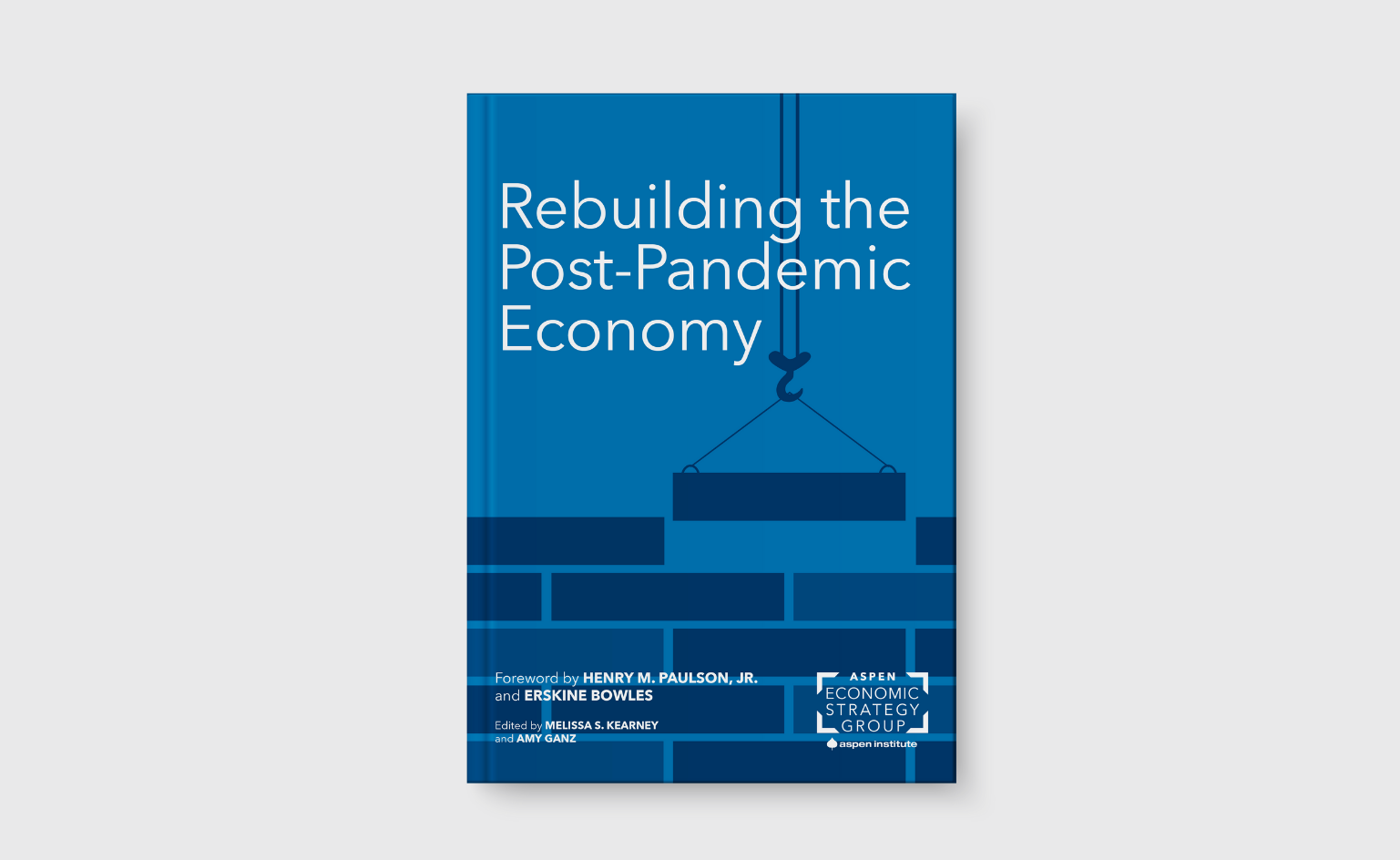
The policy volume Rebuilding the Post Pandemic Economy examines important questions about how the post-pandemic economy will take shape. What are some initial lessons we can take away from the novel government programs that were deployed to provide economic relief and stimulus? How can we implement new infrastructure investments to maximize efficiency and equity, and best respond to the climate crisis? After a year of widespread school closures, what have we learned about the role of K-12 education in perpetuating or reducing social and economic inequities? And how should American trade policies evolve to promote economic recovery and strengthen America’s role in the global economy?

DOWNLOAD BOOK

Brookings Institution: Six reasons why an expanded Child Tax Credit or child allowance should be part of the US safety net

The Child Tax Credit has been part of the federal income tax code since 1997. It has been expanded many times, most recently as part of the American Rescue Plan. Under this plan, for the year 2021, the maximum Child Tax Credit amount is increased from $2,000 per child to $3,600 for children below the age of 6 and to $3,000 for children under age 18.  This credit amount is phased out at high levels of income in two steps. The increased credit is phased down to the previous credit amount starting at income of $112,500 for single parents and $150,000 for married parents; that reduced amount is then phased out completely, beginning at income of $200,000 for single parents and $400,000 for married parents. In addition to the increased credit amount and expanded range of qualifying income up the income distribution, for 2021, the credit is fully refundable. This means that parents receive the full credit amount, regardless of the amount of taxes they owe. This has the effect of extending the credit to families with no taxable income. These changes result in a child benefit, administered through the tax code, that is nearly universal and unconditional on parental work status.

House Democrats have proposed extending this expanded Child Tax Credit through 2025. Other policy makers have expressed reservations about this proposed extension, citing concerns about having a credit payment that is unconditional on work and on extending a payment to high income families. A consideration of the pros and cons of a nearly universal, unconditional child tax credit or benefit amount raises a host of issues. It is useful to consider these issues within the framework of the optimal design of a social safety net system. Within this broad framework, there are six specific points about the desirability of such a payment.

1. We should have social insurance against child poverty.

In this country, we provide social insurance to people who find themselves in what economists call “the bad state of the world.” We have disability insurance for people who find themselves unable to work and earn a substantial amount of money in the labor market. We have unemployment insurance for people who lose their jobs. We have social security old age payments for people who live beyond their working years and are either no longer able to work or have not saved enough. This is social insurance against elderly poverty.

However, we have no social insurance for kids who—through no fault of their own—find themselves living in a home with material deprivation. I think if most of us were going to design a system of social insurance from behind a Rawlsian veil of ignorance—meaning, we were going to design a world that we’d like to be born into before knowing our place in that world—providing social insurance against child poverty would be the first type of social insurance we’d provide.

From the perspective of social insurance and a reasonable social welfare function, there is a strong case for a basic guarantee of income for kids and in particular social insurance against child poverty. (This is something I wrote about in an article for Brookings last October.)

2. From the perspective of government spending as an investment, this would yield a positive social return.

Here I am implicitly equating a tax credit with a spending program. Conceptually they are the same. In practical administrative terms, they are not the same thing. There are practical challenges with running social policy through the tax code, but for the moment, I want to set those considerations aside and focus on the social return to government “spending”—whether that “spending” comes in the form of foregone tax revenue, tax credits, or an explicit spending program.

Spending on children, especially children from low-income homes, has a large social return. We have a lot of evidence showing that increasing the income and material resources of low-income families with children leads to better school performance, better child and maternal health outcomes, and better long run outcomes for children. We are vastly underinvesting in our nation’s children currently and a child allowance or expanded child tax credit would go some way toward rectifying that. (This is something Diane Schanzenbach and Hilary Hoynes and I highlighted in a piece we wrote for the Conversation earlier this year.)

The investment aspect for the Child Tax Credit is harder to make the further up the income distribution you go. The current expansion of the Child Tax Credit up the income distribution means many high-income families are receiving this additional income. We have very little evidence that supplementing the income of higher-income families has a positive social return, so you’d need to lean on other arguments to justify expansions up the income distribution.

I think there is a very compelling social investment case to be made for the anti-poverty aspects of the Child Tax Credit coming from the expansions in credit amounts to lower-income families. That case falls apart the farther up the income distribution we go.

3. Providing income assistance to children regardless of their parents’ work status would fill a hole in our current safety net.

To my mind, the key benefit of introducing an unconditional child allowance or child tax credit is because there is a gaping hole in our safety net. We don’t have any meaningful source of income support for kids whose parents don’t work and who don’t qualify for categorical income assistance, say, through a medical eligibility that qualifies them for Supplemental Security Income (SSI). 

An unconditional child allowance or refundable child tax credit differs from a policy that conditions benefit or credit receipt on work, like the Earned Income Tax Credit (EITC) does. The EITC does two things—it supplements the wages of low-income workers and it also transfers money to families with children. These are two laudable goals, but they don’t have to be accomplished with the same program.

I like the idea of divorcing the supplementation of wages of low-income workers and transferring money to children. These policy goals can be separated so that kids whose parents have very low or no earnings are not left without government assistance. An unconditional child allowance or tax credit rightly fills in this gap in our safety net.

4. A nearly universal child tax credit or allowance limits work disincentives.

On the one hand, as I’ve mentioned, there is little investment rationale for extending this type of benefit payment up the income distribution. On the other hand, a near universal design limits work disincentives. The usual work disincentives of transfer programs come from both substitution effects, which come from the fact that benefits are clawed back as people’s earnings income, which provides a disincentive to work, and income effects, by which people might choose to work less because they have more money.

A nearly universal child tax credit means that the credit is not clawed back as people earn more money (except at very high levels of earnings), so there is only an income effect. Those who worry about the work disincentives of transfer programs should find this design appealing. On net, we should expect to see less work reduction from this design than we would from a more typical transfer program design, like in the old Aid to Families with Dependent Children (AFDC) program.

5. There is a case to be made for additional cash benefits to supplement existing in-kind program benefits.

There is a strong case to be made for providing more cash assistance to low-income families with children, supplementing our existing panoply of programs that provide health insurance, food and nutrition assistance, and limited housing assistance. (I would argue we need more housing assistance as well.) This would help families meet the different needs that they face, which arrive at unpredictable times, and are hard to meet with the various siloed programs that currently exist.

The criticism of this approach is that some worry that some parents will not spend money in ways that benefit kids. But we have good evidence from a variety of income shocks—things like EITC expansions, for example—that low-income children generally benefit from the additional income coming into the family. So even if there are some parents who might not spend the money in the ways that would most benefit their children all the time, in general, we can expect that the money will be spent in ways that improve children’s outcomes.

6. This is just not that expensive relative to the likely social benefits.

The final point to make is about the fiscal costs of an expanded child tax credit. This is just not that expensive, relative to the benefits we will get from that government spending. Estimates suggest that the Child Tax Credit costs about $118 billion a year; the temporary Child Tax Credit expansions under the America Recovery Act are projected to cost about $105 billion a year.

Another option would be a child benefit or allowance (as opposed to a tax credit), something like what I proposed in a simple thought experiment I wrote up in a Brookings post last October. I noted that if we gave each child living in poverty the average Social Security benefit received by a Social Security recipient age 65 and over (about $17,000 per year), the rate of childhood poverty in this country would fall to less than one percent. If we gave each child living in poverty half the average Social Security benefit ($8,556 annually), the rate of childhood poverty in this country would fall to about 3 percent. The cost of this dramatic reduction in child poverty would cost $179 billion for the full benefit award and $90 billion a year for the half benefit award.

To put that money in perspective, let’s compare this to a Universal Basic Income (UBI), a policy idea that has gotten a lot of attention over the past couple of years. A UBI would guarantee a meaningful level of income to every adult in the United States. A payment of $10,000 per year to every US adult would cost $2.5 trillion.  Why are we even having that conversation when we could essentially eradicate child poverty in this country for $180 billion? Even if we reduced the UBI award to be $10,000 a year to adults who make less than $20,000 and then phased out at 30 percent, it would still cost $1.5 trillion per year. A targeted child allowance would cost a fraction of that, and constitute an investment in the next generation.

To conclude, for these main six reasons, an unconditional child tax credit or a child allowance fits into a well-designed social safety net in our country.

This article was originally published by the Brookings Institution.

AESG Member Statement: A Call for US Leadership on Global Vaccination Efforts

The United States government should take up a position of world leadership on ending the global COVID-19 pandemic through vaccine outreach to the world. Such an effort would serve a clear humanitarian purpose. It would represent forward defense of our security interests by slowing the virus’s rate of mutation. No other action would so clearly signify a US commitment to enlightened international leadership at a time when our strength and outward looking vision is increasingly being challenged and no other initiative would do more to stabilize the global economy.

Wise policy making requires balancing rigorous attention to detail with bold vision. If national commitment awaited detailed technocratic plans, the U.S. would never have launched the Marshall Plan, sent a man to the moon, or launched the PEPFAR policy that has done so much to combat AIDS. With the Delta variant of COVID becoming pervasive and more mutations likely, now is the time for bold action. The necessary global approach will involve financial commitments, as well as active policies to encourage production capacity at home and abroad, to strengthen local health system capacity in partnership with developing countries, and to promote private sector initiatives.  We must reject the false dichotomy between domestic and global efforts. Given mutation risk, safety anywhere depends on safety everywhere.

The International Monetary Fund estimates that roughly 60 percent of the world could be vaccinated by mid-2022 for $50 billion. This is less than one percent of what the US has already committed in response to COVID. Other nations would join a US initiative. Because US spending could be leveraged by the international financial institutions and the private sector, each dollar of US contribution could be leveraged 5 or 10 to 1. In all likelihood, US investment in global vaccination would pay for itself several times over by strengthening the US and global economy, reducing further virus spread, and building international good will towards the United States.


SIGNATORIES*

Mary Barra
General Motors

Ben Bernanke
Brookings Institution

Joshua Bolten
Business Roundtable; Former White House Chief of Staff

Erskine Bowles
Aspen Economic Strategy Group; Former White House Chief of Staff

Chad Bown
Peterson Institute for International Economics

Ken Chenault
General Catalyst

Susan Collins
University of Michigan

David M. Cote
Vertiv Holdings

James S. Crown
Henry Crown & Company

Roger W. Ferguson, Jr.
TIAA (Emeritus)

Michael Froman
Mastercard; Former US Trade Representative

Jason Furman
Harvard University

Timothy Geithner
Warburg Pincus; Former US Treasury Secretary

Austan Goolsbee
University of Chicago

Glenn Hubbard
Columbia University

Doug Holtz-Eakin
American Action Forum

Neel Kashkari
Federal Reserve Bank of Minneapolis

Melissa S. Kearney
The University of Maryland; Aspen Economic Strategy Group

Jacob Lew
Lindsay Goldberg; Former US Treasury Secretary

Maya MacGuineas
Committee For a Responsible Federal Budget

David McCormick
Bridgewater 

Marc Morial
National Urban League

Janet Murguia
Unidos US

Michael A. Nutter
Former Mayor of Philadelphia

Jim Owens
Caterpillar (Emeritus)

Henry M. Paulson, Jr.
The Paulson Institute; Aspen Economic Strategy Group; Former US Treasury Secretary

John Podesta
Center for American Progress; Former White House Chief of Staff

Ruth Porat
Alphabet and Google

James Poterba
Massachusetts Institute of Technology

Penny Pritzker
PSP Partners; Former US Secretary of Commerce

Robert Rubin
Centerview Partners; Former US Treasury Secretary

Paul Ryan
American Idea Foundation; Former US Speaker of the House

Matthew Slaughter
Tuck School of Business at Dartmouth

Margaret Spellings
Texas 2036

Michael R. Strain
American Enterprise Institute

Lawrence H. Summers
Harvard University; Former US Treasury Secretary

Mark Weinberger
EY (Emeritus)

Robert Zoellick
Brunswick Group; Former President of the World Bank


*Affiliations are listed for identification purposes only and do not necessarily reflect the position of members’ institutions. 

Internet Access and its Implications for Productivity, Inequality, and Resilience

The past year has brought an unprecedented change in the way Americans work, with millions of workers working from home and connecting to colleagues and clients virtually. In an AESG report titled “Internet Access and its Implications for Productivity, Inequality, and Resilience,” economists Jose Maria Barrero (Instituto Tecnológico Autónomo de México), Nicholas Bloom (Stanford University), and Steven J. Davis (University of Chicago) examine the role that home internet quality plays in driving worker productivity under this new work paradigm.

The authors draw timely insights and lessons from the Survey of Working Arrangements and Attitudes (SWAA), an original cross-sectional survey they have collected since May 2020 on over 40,000 working age Americans. They estimate that universal internet access – defined as high quality, fully reliable home internet service for all Americans – would raise earnings-weighted productivity in the post-pandemic economy by 1.1%, which implies flow GDP gains of $160 billion per year, or a present value gain of $4 trillion at a 4% discount rate. They estimate that universal access would raise the extent of work from home (WFH) in the post-pandemic economy by about seven-tenths of a percentage point.

Universal internet access promotes economic and social resilience by facilitating commerce and socialization at a distance. Internet technologies enabled large sectors of the economy to function well during the pandemic. In addition, existing evidence suggests that home internet access may help to mitigate the negative health effects of loneliness and social isolation in a time of pervasive social distancing.

THE SURVEY OF WORKING ARRANGEMENTS AND ATTITUDES
Barrero, Bloom, and Davis have fielded the Survey of Working Arrangements and Attitudes since May 2020, collecting 2,500 to 5,000 responses per month. Survey respondents report higher productivity when working from home during the pandemic as compared to when working on employer premises before the pandemic.

In previous research, the authors combined this survey data with information about employer plans regarding post-pandemic work arrangements to predict what a re-optimization of work arrangements post-pandemic would look like. They estimated that one-fifth of paid workdays will be supplied from home in the post-pandemic economy and more than a quarter of workdays on an earnings-weighted basis. They also estimate that re-optimization could be expected to boost productivity by close to 5%, largely through saved commuting time.

PROJECTING THE PRODUCTIVITY EFFECTS OF UNIVERSAL ACCESS
The authors combine individual-level data on the planned extent of WFH in the post-pandemic economy with individual-level estimates for the productivity impact of universal access to project the effects of a hypothetical move from the current state of internet access to one with high quality, fully reliable internet access in all households. The authors find large productivity consequences as a result of imperfect internet: a 3% aggregate labor productivity shortfall during the pandemic and a 1.1% gain from universal access in the post-pandemic economy. To the extent that better internet access improves WFH efficiency, the authors conclude that the overall estimated impact on the extent of WFH—an increase of 0.7 percentage points—is quite modest both during and after COVID. Importantly, the impact also varies little across demographic groups.

Barrero, Bloom, and Davis also derive implications for aggregate output, finding that the flow output loss during the pandemic is nearly three times as large as the projected flow benefits from universal access in the post-COVID economy. They note that this comparison underscores the economic resilience value of universal access: the output payoff is much larger in pandemic-like disaster states when output is unusually low and the marginal value of output is unusually high.

Barrero, Bloom, and Davis additionally analyze the earnings gains to workers from the associated productivity enhancements and estimate that such gains would be nearly uniform across income and demographic groups, meaning that productivity improvements would not come at the expense of widening inequality.

The authors recognize that there is uncertainty around their estimates of the impact of universal access on productivity and output. For instance, insofar as pandemic-related stressors (kids at home, lack of technological familiarity) pulled down WFH productivity during the pandemic, their estimates might understate the positive effect of internet access on WFH productivity after the pandemic. In addition, they lack survey data on the relative efficiency of WFH for respondents with no WFH experience during the survey period, accounting for 43.3% of respondents on an equal-weighted basis and an estimated 34.2% on an earnings-weighted basis. The lack of data for these respondents may lead them to overstate the effects of universal access.

INTERNET ACCESS AND SUBJECTIVE WELL-BEING DURING THE PANDEMIC
The authors examine the social effects of fully reliable internet access, particularly during crises such as the COVID-19 pandemic. They cite evidence that suggests that social distancing during the pandemic and pandemic-related stresses had negative health effects for many Americans. Such evidence motivates the hypothesis that better internet access during the pandemic alleviated the harmful psychological and other health effects of social distancing and pandemic- related stresses.

Using responses from the SWAA, the authors conclude that universal access would materially improve well-being during pandemic-like disasters for persons who currently lack home internet service while smaller improvements in well-being would accrue to persons who currently have subpar access.

UNIVERSAL ACCESS AS A SOURCE OF RESILIENCE
Barrero, Bloom, and Davis emphasize that by raising output in the face of infectious disease outbreaks, biological attacks, and other disaster states that involve physical distancing, universal access to high-quality home internet service would strengthen U.S. economic resilience. For society as a whole and for individual firms and workers, the capacity to quickly switch between production modes of roughly equal productivity is a valuable option that pays off especially in bad states of the world. The authors’ analysis suggests that the output payoff to universal access during pandemic-like disasters is nearly three times as large as the payoff during normal periods and that universal access promotes resilience by providing a ready means of engagement and socializing when circumstances compel physical distancing.

The authors also cite other important benefits of universal access that they do not quantify, such as the ability of households to turn to online shopping and home delivery services during a pandemic-like disaster, increased compliance with stay-at-home orders, and ameliorated gaps in remote learning opportunities. The authors underscore the importance of such enhanced economic and social resilience in the face of recurring outbreaks of COVID-19 and other infectious diseases.

Suggested Citation: Barrero, Jose Maria, Nicholas Bloom, and Steven J. Davis. December 10, 2021. “Internet Access and Its Implications for Productivity, Inequality, and Resilience”. In Rebuilding the Post-Pandemic Economy, edited by Melissa S. Kearney and Amy Ganz. Washington, DC: Aspen Institute, 2021. https://doi.org/10.5281/zenodo.14057577.

Chapter

Executive Summary

Aspen Economic Strategy Group Releases New Policy Analyses Examining the US Infrastructure Agenda

Three papers examine how infrastructure investments can promote economic growth and broader prosperity.

Washington, DC, July 14, 2021 – The Aspen Economic Strategy Group (AESG) today released a set of three papers on infrastructure and technological innovation and their impact on the post-pandemic economic recovery.  These papers will be included in the group’s annual policy volume, “Rebuilding the Post-Pandemic Economy,” which will be released in December 2021, but it was critical to release these papers now so they can help inform debate as the US infrastructure agenda evolves.  The authors of these papers, all renowned experts on the topics covered, provide important economic insights relevant to ongoing private and public sector discussions about the size and scope of infrastructure spending. 

The AESG, a diverse, bi-partisan group of distinguished economic leaders and thinkers, will convene in late July to discuss important questions about why and how to invest in American infrastructure.  How much infrastructure investment do we need and what type of infrastructure should be prioritized (roads and bridges vs. digital infrastructure)?  How do we enhance the efficiency of the current infrastructure stock? How should we think about the equity dimensions of new infrastructure investments? 

As the Senate reconvenes this week and resumes work on a bipartisan infrastructure plan, the papers provide economic analyses on which types of new infrastructure investments can be a springboard for innovation, energy efficiency, sustained competitiveness, and broader prosperity.


Economic Perspectives on Infrastructure Investment
Edward Glaeser, Fred and Eleanor Glimp Professor of Economics in the Faculty of Arts and Sciences at Harvard University
James Poterba, Mitsui Professor of Economics at MIT and the President of the National Bureau of Economic Research

As the country embarks on a major infrastructure initiative, the authors highlight relevant policy lessons from economic studies of infrastructure projects.  Key themes include: 

  • Projects vary widely in their benefits and costs, even within categories such as roads and bridges. Overall, interstate highways today are smoother, and fewer bridges are structurally deficient, than several decades ago. Careful cost-benefit analysis, perhaps carried out by a nonpartisan federal agency created for the purpose, can help identify which projects should be undertaken.
  • While many potential infrastructure projects have substantial benefits, infrastructure costs in the United States are very high by international standards.  Controlling costs by improving procurement practices and project management can raise the benefits per dollar of infrastructure spending. 
  • Maintaining existing infrastructure, rather than building new projects, is one of the most cost-effective ways to deploy new infrastructure dollars.


Challenges of a Clean Energy Transition and Implications for Energy Infrastructure Policy
Severin Borenstein, E.T. Grether Professor of Business Administration and Public Policy at the Berkeley Haas School of Business
Ryan Kellogg, Professor and Deputy Dean for Academic Programs at the University of Chicago Harris School of Public Policy

A central challenge in the transition to clean energy is the need to simultaneously control costs and ensure a reliable energy supply.  The authors present key issues the country faces in transitioning to a low-carbon energy system, and the infrastructure that will be needed to support this transition:  

  • Broad incentives – such as carbon pricing, clean energy standards, or clean energy subsidies – that do not discriminate across zero-emissions resources will be essential for directing capital towards cost-effective investments in clean energy infrastructure.
  • The climate challenge is a global challenge, and an essential way to encourage other nations to reduce their own emissions will be to invest in development of zero-emissions technologies and then export those technologies around the globe.
  • Reforms to wholesale and retail electricity markets, and to the regulatory process for long-distance transmission investment, are needed to enable a low cost energy transition that distributes its costs and benefits in an equitable way.
  • The clean energy transition must provide for decommissioning of legacy fossil fuel infrastructure, which also offers an opportunity to employ displaced oil and gas workers.


Science and Innovation: The Under-Fueled Engine of Prosperity
Benjamin Jones, Gordon and Llura Gund Family Professor of Entrepreneurship, and Professor of Strategy at the Kellogg School of Management at Northwestern University

The paper explores the central role of science and innovation in the national interest and what role the government needs to have in enacting policies that strengthen public investment.  Key findings include:  

  • The United States massively underinvests in science and innovation, with implications for our future standards of living, health, national competitiveness, and capacity to respond to crises.
  • Public R&D investment is near its lowest level in the last 60 years and doubling current funding would more than pay for itself. 
  • The social returns to R&D investment are huge: for every $1 that is invested, society reaps an average return of $5.


“As policymakers continue to shape the US infrastructure agenda, these papers provide valuable insights and recommendations about how to promote efficient and equitable investments,” said Melissa S. Kearney, AESG Director and the Neil Moskowitz Professor of Economics at University of Maryland. “Smart investments in infrastructure will advance the goals of a more robust, inclusive, and resilient nation.”  

The Aspen Economic Strategy Group (AESG), a program of the Aspen Institute, is composed of a diverse, bipartisan group of distinguished leaders and thinkers with the goal of promoting evidence-based solutions to significant US economic challenges. Co-chaired by Henry M. Paulson, Jr. and Erskine Bowles, the AESG fosters the exchange of economic policy ideas and seeks to clarify the lines of debate on emerging economic issues while promoting bipartisan relationship-building among current and future generations of policy leaders in Washington. More information can be found at https://economicstrategygroup.org/.

The Aspen Institute is a global nonprofit organization committed to realizing a free, just, and equitable society. Founded in 1949, the Institute drives change through dialogue, leadership, and action to help solve the most important challenges facing the United States and the world. Headquartered in Washington, DC, the Institute has a campus in Aspen, Colorado, and an international network of partners. For more information, visit www.aspeninstitute.org.


Contact:
Suzanne Pinto
Suzanne.Pinto@argos-communications.com