Strengthening America’s Economic Dynamism

DOWNLOAD BOOK (pdf)

The Aspen Economic Strategy Group’s seventh annual policy volume focuses on the theme, Strengthening America’s Economic Dynamism. The volume’s publication comes at a time when US policymakers are turning away from free-market principles in favor of protectionist policies and more active government-directed industrial policy. These shifts, combined with growing economic and political difficulties including the country’s mounting debt, limited state capacity, and rapidly advancing technologies, have the potential to hinder economic dynamism and growth. Our 2024 policy volume draws on these themes to answer questions about the state of the US economy amidst an era of rising global tensions, technological change, and a populist backlash to the economic status quo. 

Introduction
By Melissa S. Kearney and Luke Pardue

PART I: ECONOMIC NATIONALISM IN AN ERA OF GLOBALIZATION

Protectionism is Failing and Wrongheaded: An Evaluation of the Post-2017 Shift toward Trade Wars and Industrial Policy
By Michael R. Strain

The Surprising Resilience of Globalization: An Examination of Claims of Economic Fragmentation
By Brad Setser

PART II: FISCAL AND STATE CAPACITY

State Capacity for Building Infrastructure
By Zachary Liscow

Eight Questions—and Some Answers—On the U.S. Fiscal Situation
By Jason Furman

PART III: WORKERS, FIRMS, AND COMMUNITIES

Technological Disruption in the US Labor Market
By David Deming, Christopher Ong, and Lawrence H. Summers

Why Crime Matters, and What to Do About It
By Jennifer Doleac

Why Crime Matters, and What to Do About It

Download Paper Executive Summary

In this paper, Jennifer Doleac describes what is known about crime trends in the US and outlines the best evidence to date on the effectiveness of various approaches to reducing crime through prevention, deterrence, and rehabilitation. 

Crime in the US rose during the 1980s and early 1990s before declining steadily until 2020. During the COVID-19 pandemic, homicides, shootings, and motor vehicle thefts spiked, but by late 2023, overall rates of homicides and shootings had returned to their pre-pandemic levels. Because less serious offenses such as carjackings are much more difficult to track with nationwide data systems, we currently have an incomplete picture of how those crimes have trended in recent years across the country. Certain types of crime remain high, however, and Doleac emphasizes that crime continues to disproportionately affect certain urban areas and communities.
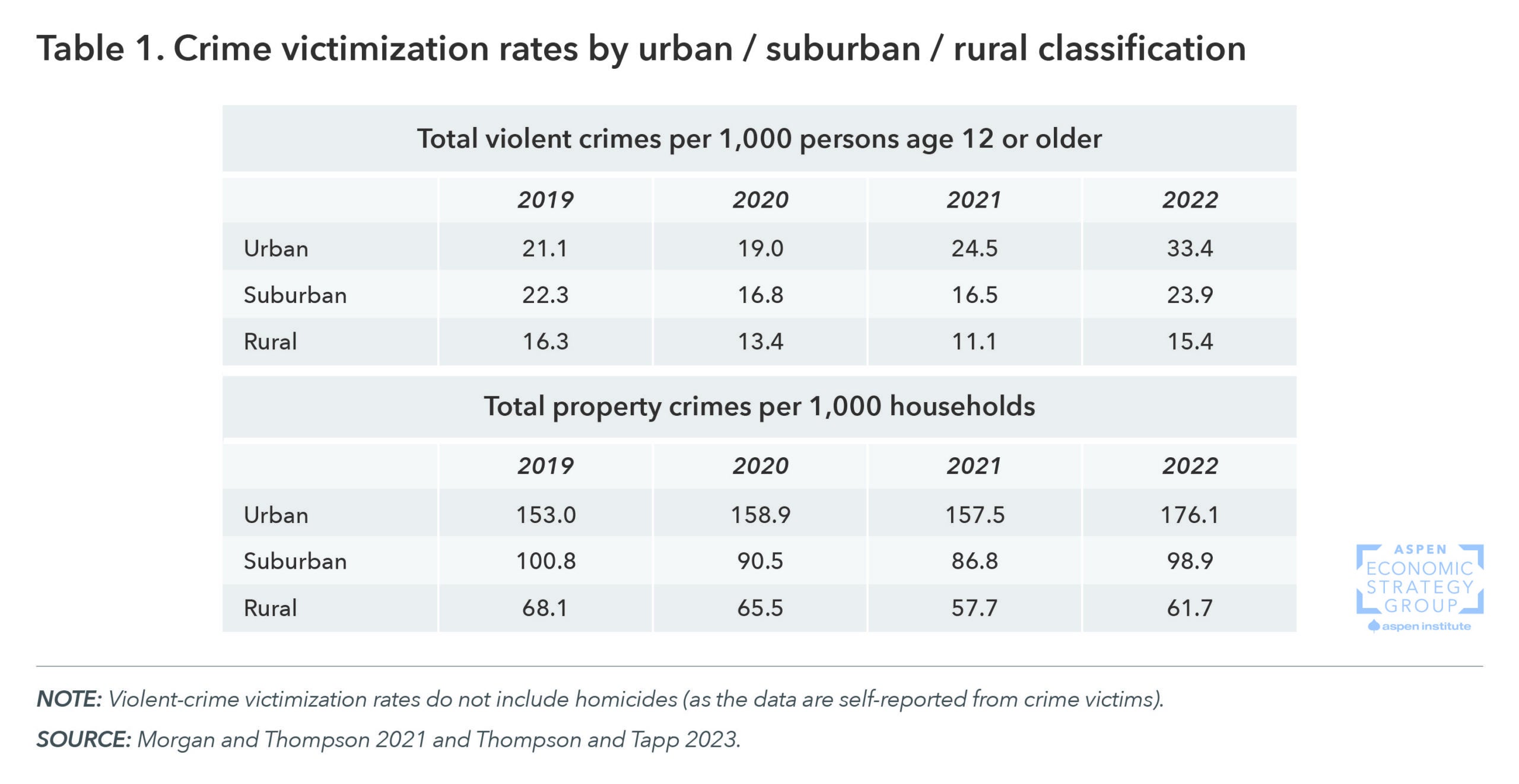
Doleac considers the costs of crime on victims and communities through both direct and indirect channels. Direct victim costs encompass medical expenses, cash or property losses, lost earnings, and pain and suffering. In addition to directly affecting victims, crime indirectly affects broader communities through reduced property values, diminished business activity, reduced school attendance, and increased mental health issues like anxiety and depression arising from fear for personal safety and property. 

The costs of crime also come in the form of resources devoted to law enforcement and punishment. The majority of such efforts are conducted by state and local governments, which spent 7.5 percent of their overall budgets on the criminal justice system in 2021, amounting to $274 billion. These funds cover the employment of law enforcement personnel, the costs of the judicial system, and the costs of housing prisoners in correctional facilities. The federal government contributes an additional $58 billion to criminal justice expenses annually, or 1.5 percent of its budget. Combining the direct—tangible and intangible—costs to victims with the costs of law enforcement and punishment, researchers estimate that this aggregate cost of crime in the United States (excluding indirect costs) totals $4.7–5.8 trillion each year.

Given the high cost of crime to victims and affected communities, it is important to allocate crime-prevention efforts to interventions with evidence of effectiveness. Doleac proposes three effective channels to address crime through, and examines the effective strategies in each one. 

1. Preventing someone’s first interaction with the criminal justice system. 

Studies across several cities have found that offering summer jobs for teens, which provides positive career exposure and mentorship, reduces future violent-crime arrests and lowers mortality due to gun violence. Additionally, cognitive behavioral therapy pushes individuals to think more deliberately about the relative costs and benefits of their actions, and has been proven to cause meaningful reductions in violent arrests and recidivism. Over the long term, investments in improving the health of children—such as removing lead from the environment and reducing air pollution—are extremely cost-effective, causing large improvements in educational attainment and reductions in criminal justice involvement.

2. Deterring crime in the community

At the community level, Doleac proposes two main strategies for cost-effective crime deterrence. First, putting more police on the streets remains an effective, evidence-based way to reduce crime relatively quickly. Second, employing technology such as cameras, DNA databases, and blood-alcohol content monitors can enhance crime detection at a lower cost than increasing police personnel.

3. Rehabilitating people with past criminal justice involvement. 

To enhance rehabilitation, erring toward leniency for first-time offenders—giving them a second chance to avoid a first criminal record—dramatically reduces recidivism. Doleac also recommends the broader use of electronic monitoring systems as an alternative to prison sentences. Making mental health care affordable and easier to access is also a smart crime-reduction strategy. Finally, bans on public benefits for those with a criminal record should be repealed, as these bans not only increase recidivism rates but also increase future criminal activity for children of parents with criminal records.

Doleac concludes by emphasizing the importance of three approaches in particular as the most likely to have meaningful effects: investing in early life interventions, including reducing young children’s exposure to lead; making better use of police and technology to detect and deter crime; and increasing access to mental health care for high-risk populations. As crime continues to be a challenge for communities across the United States, it is not only important to invest in crime prevention strategies, but to ensure those strategies are effective and well implemented. 

Suggested Citation: Doleac, Jennifer., 2024. “Why Crime Matters, and What to do about it” In Strengthening America’s Economic Dynamism, edited by Melissa S. Kearney and Luke Pardue. Washington, DC: Aspen Institute. https://doi.org/10.5281/zenodo.13975447.

State Capacity for Building Infrastructure

Download Paper Executive Summary

Data Appendix

This paper, by Zachary Liscow, examines state capacity for infrastructure construction in the United States. It identifies three elements of state capacity that drive up costs and slow down timelines: insufficient personnel, onerous procedures, and a lack of adequate tools. Liscow offers specific suggestions about ways to address these challenges and improve US public capacity to carry out infrastructure projects. 

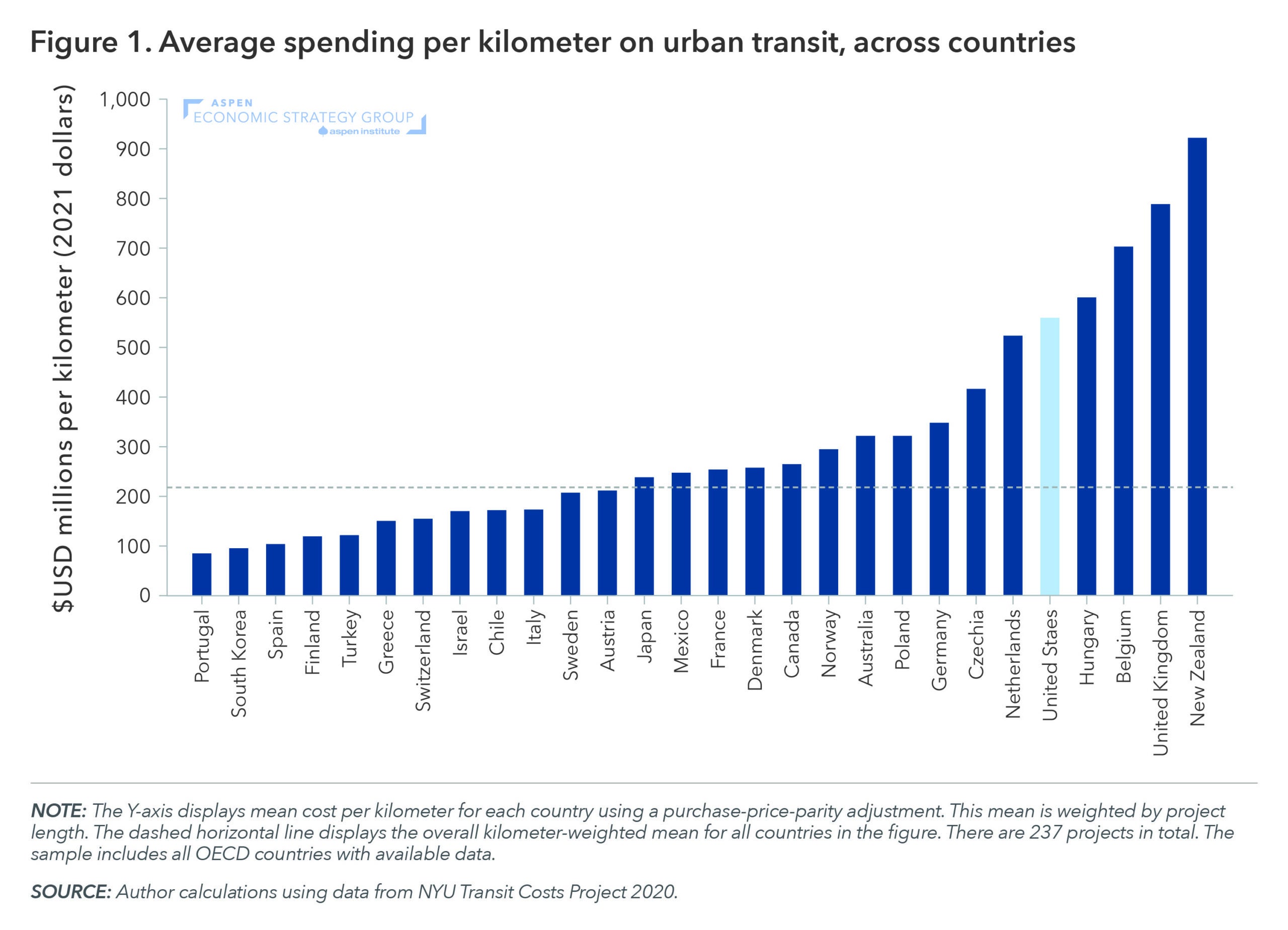
High costs, lengthy construction timelines, and increased input prices are core hindrances to US state capacity. The cost of building urban-transit infrastructure in the US is approximately $560 million per kilometer, over two and a half times the OECD average. These costs have increased sharply over time, more than tripling between the 1960s and 1980s and continuing to rise since. 

At the same time, construction timelines are inefficiently long. For instance, when it comes to energy infrastructure, the typical deployment timeline for offshore wind in the US is between three and five years, and for extra-high-voltage power lines, the typical timeline is between five and 13 years. 

Liscow identifies three forces driving these challenges in the US: 

Personnel
Employment of government workers available for state infrastructure capacity have barely increased or have declined over time, and federal government pay has fallen behind private-sector pay over time. As there are fewer government workers per dollar of work done, planning and management are increasingly outsourced. To address these issues, Liscow recommends employing more infrastructure experts and aligning public-sector salaries with those in the private sector to attract skilled professionals. Expanding the size and quality of the government workforce in this respect would improve planning efficiency and reduce timelines, generating its own cost savings.

Cumbersome Procedures
It takes a relatively long amount of time to acquire infrastructure permits in the US, compared to other developed countries, and the process is lengthened by substantial litigation around infrastructure permitting. Liscow proposes simplifying administrative procedures and judicial-review rules to streamline the construction process. Empowering the executive branch relative to the judiciary can reduce the use of litigation to stall projects. He recommends streamlining feedback processes to better understand public preferences while reducing the time to gather such information. 

Lack of Tools
Data infrastructure and transparency are weak, making it hard for the government and the public alike to understand the challenges at hand. Coordinated long-term planning is also lacking, hampering the development of renewable energy transmission lines and transportation infrastructure. Liscow first recommends that federal and state governments invest in better data systems, which would enable agencies to gain better insight into their projects and help the public advocate for more efficient spending. Second, coordinated planning would allow agencies to hire appropriate personnel and accelerate project execution. Moreover, well-developed project plans could mitigate potential litigation by addressing a wider array of stakeholder interests from the outset.

Liscow concludes by emphasizing the importance of state capacity to the effective use of government infrastructure-construction dollars. State capacity is not just an issue for infrastructure. In a wide range of government projects, hiring enough government personnel, paying enough to attract talent, having an appropriate number of procedural rules, and giving personnel the tools to succeed can help make government work better—producing better outcomes for the public and building trust in government.

Suggested Citation: Liscow, Zachary., 2024. “State Capacity for Building Infrastructure” In Strengthening America’s Economic Dynamism, edited by Melissa S. Kearney and Luke Pardue. Washington, DC: Aspen Institute. https://doi.org/10.5281/zenodo.14036826.

Eight Questions—and Some Answers—on the US Fiscal Situation

Download Paper Executive Summary

In this paper, Jason Furman addresses eight specific questions essential to understanding the US fiscal situation and what policymakers can do to address the federal debt. He finds that an adjustment of between 0.7 and 4.6 percent of GDP is necessary to stabilize the debt over the next decade, and he proposes a broad set of reforms to achieve such an adjustment, including tax reform, PAYGO conditions for new spending programs, and reforms to Social Security and Medicare.

In fiscal years 2022, 2023, and 2024, the US ran an average deficit of 6 percent of GDP, despite a strong economy. As a result, 2024 ended with the debt at about 99 percent of GDP, higher than it had been in any year except 1945 and 1946. The CBO expects the primary deficit (excluding interest payments on the debt) to improve over the next decade, but that development will be offset by higher interest rates leading to larger interest payments on the debt. In short, the fiscal path remains unsustainable: The federal deficit ranges from 6 to 10 percent of GDP, and the debt will likely reach between 111 and 141 percent of GDP by 2030. 

Furman emphasizes that, while the “known knowns” of rising debt, such as crowding out of private investment, are not particularly large, the “unknown unknowns” are potentially much larger and even more consequential. For instance, there are growing concerns about whether the Treasury will have access to the necessary borrowing ability in the future, should debt levels rise acutely. Although the likelihood of a fiscal crisis may seem low, its potential consequences would be severe. 

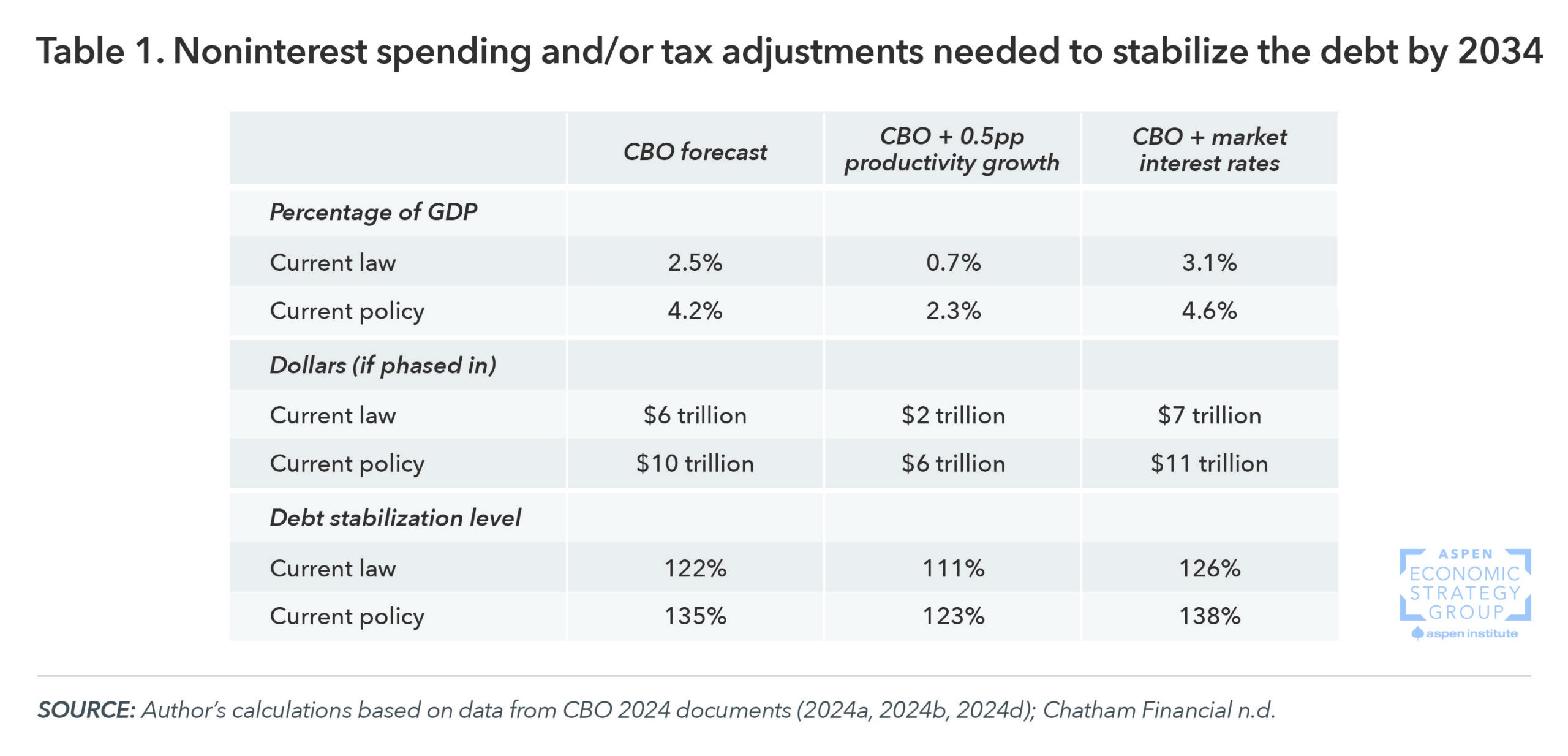
The estimated deficit reduction needed to stabilize the debt by 2034 depends on the path of policy and on economic variables, such as interest rates and productivity growth. Under the scenarios Furman explores in this paper, an adjustment of 0.7 and 4.6 percent of GDP in higher taxes or lower noninterest spending is necessary to stabilize debt over the next decade (equivalent to between $2 trillion and $11 trillion in adjustments). 

Furman reviews the likely impact of a menu of possible tax and spending proposals, highlighting several key takeaways. First, revenue from corporations and high-income individuals is not sufficient to close the fiscal gap. For instance, such provisions in the Biden administration’s 2025 budget would raise about 1.3 percent of GDP in revenue. A more aggressive set of proposals would likely run into Laffer-curve constraints before revenues reached 2 percent of GDP. 

Second, extending the 2017 tax cuts would add another 1.5 percent of GDP to the fiscal gap, substantially exacerbating the situation. Third, outside cuts to Social Security, not even relatively dramatic spending cuts in other programs would come close to reducing the deficit by even 1 percent of GDP. Finally, restoring solvency to Social Security and Medicare through tax or benefit changes would close about 1.5 percent of the current law deficit.

Policy Recommendations

Furman concludes by recommending that policymakers balance the primary budget, which excludes interest payments, by 2030. Achieving this goal would stabilize the debt at 125 percent of GDP and, under both CBO and market interest rate forecasts, would keep interest payments below 2 percent of GDP. Debt would then, in turn, start to gradually fall as a percent of GDP—which is essential, given that periodic emergencies (such as wars, financial crises, and pandemics) ratchet up the debt-to-GDP ratio. 

To achieve this outcome, he proposes that policymakers undertake the following four measures:

  1. Do not pass any new tax legislation in 2025, unless it includes a reform plan that increases revenues by 0.5 percent of GDP relative to current law. 
  2. Implement a Super PAYGO system for all future legislation, where savings would exceed costs by 25 percent. 
  3. Reform Social Security and Medicare to ensure the trust funds’ solvency for the next 75 years. 
  4. Allow for flexibility to address economic and international emergencies. 

Suggested Citation: Furman, Jason., 2024. “Eight Questions—and Some Answers—on the US Fiscal Situation” In Strengthening America’s Economic Dynamism, edited by Melissa S. Kearney and Luke Pardue. Washington, DC: Aspen Institute. https://doi.org/10.5281/zenodo.14036808.

The Surprising Resilience of Globalization: An Examination of Claims of Economic Fragmentation

Download Paper Executive Summary

This paper evaluates the current landscape of global trade and financial flows and proposes a set of reforms to support healthier forms of integration. Brad Setser finds that, despite the growing, bipartisan skepticism about the value of liberal trade, global economic integration remains surprisingly resilient. In fact, Setser argues, the immediate risk facing the global economy is more accurately described as unhealthy integration than fragmentation. Setser identifies two unhealthy forms of globalization that have proven to be resilient – those driven by corporate tax avoidance strategies and persistent trade and payment imbalances with China – and offers three policy reforms to address these risks.

Tax avoidance tactics, such as the “Double Irish” strategy, have allowed major companies to route profits through offshore subsidiaries to minimize tax liabilities. The OECD’s 2015 base erosion and profit shifting (BEPS) reforms, aimed to curtail such practices by eliminating stateless income and zero-tax jurisdictions. The 2017 Tax Cuts and Jobs Act (TCJA) subsequently further addressed the issue of international tax avoidance by reducing the corporate tax rate, ending deferral, and introducing two new special tax rates for Foreign-Derived Intangible Income (FDII) and Global Intangible Low-Tax Income (GILTI).

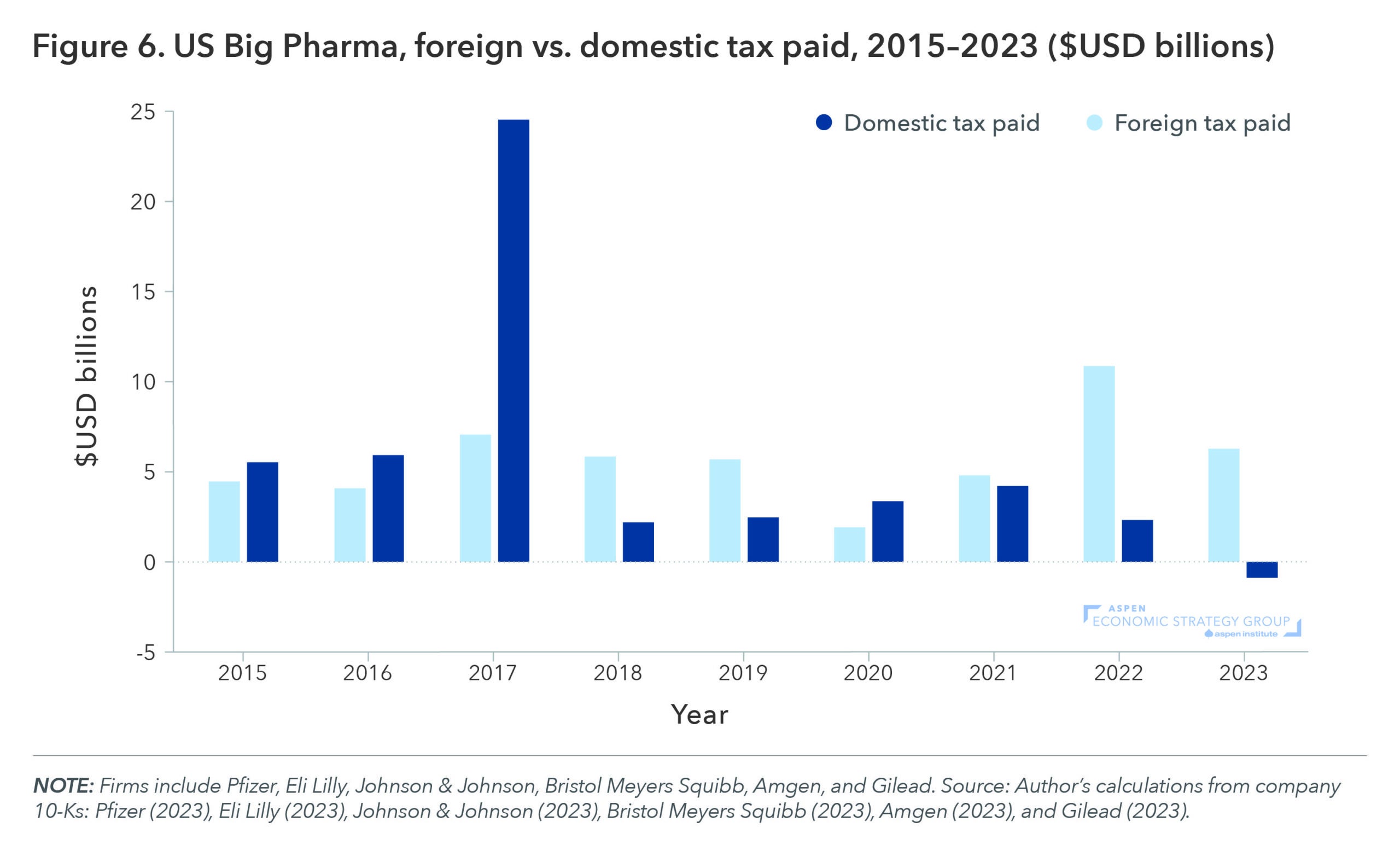
Despite these reforms, tax avoidance and offshoring are still considerable issues in the US tax system. The pharmaceutical industry serves as a prime example: US imports of pharmaceuticals have more than doubled since the TCJA, with imports primarily originating from tax havens such as Ireland, Singapore, and Switzerland. In 2023, seven of America’s largest pharmaceutical companies reported losing a combined $14 billion on their US operations while earning $60 billion abroad. The absence of reported profits in the US translates directly into a loss of federal tax revenues. Similar issues are present in other crucial sectors, leading to reduced domestic tax revenues and unhealthy global economic integration. 

China’s domestic economic issues pose a further challenge to global economic integration. Recent data shows China’s economy is re-globalizing and exports have recently grown much faster than China’s own economy. However, this form of globalization is the result of high household savings rates and faltering domestic demand in China, which has led the country to rely again on exports to support its economic growth. 

This export-led growth model is driven by extensive government support to favored sectors, mostly through the provision of cheap equity and cheap debt financing. Furthermore, the high level of savings creates internal imbalances in the United States, the eurozone, and in China, fueling bubbles and bad debts. The Chinese property sector has long absorbed the excess savings, but property construction is expected to normalize, creating greater pressure on exports to drive growth in China.

Setser offers three concrete steps which would start to define a path toward a healthier form of globalization.

1. Reform the US corporate tax code. Limiting offshoring, increasing the GILTI rate from 10.5 percent to 15 percent, limiting US firm’s ability to deduct R&D expenses of intellectual property in offshore subsidiaries, and making the sale of a firm’s intellectual property from one international subsidiary to another a taxable event would reduce profit shifting while raising US tax revenue.

2. Create subsidy sharing agreements among allies in key sectors. In industries such as electric vehicles and steel, subsidies sharing agreements and increased policy coordination between the US and EU would expand the market size for American and European firms and lower costs. 

3. Address China’s internal imbalances. US policymakers and international institutions such as the IMF should pressure China to change its export-led growth model and address its internal economic imbalances.

Suggested Citation: Setser, Brad. 2024. “The Surprising Resilience of Globalization: An Examination of Claims of Economic Fragmentation” In Strengthening America’s Economic Dynamism, edited by Melissa S. Kearney and Luke Pardue. Washington, DC: Aspen Institute. https://doi.org/10.5281/zenodo.13973914.

Introduction: Strengthening America’s Economic Dynamism

Read Full Introduction

Global tensions and domestic discontent are driving a new era of economic policymaking. Leaders in both parties are turning away from free-market principles and endorsing an increase in protectionist trade policies and more active government-directed industrial policy. Further, these disruptions come when the country’s economic and political landscapes face systemic difficulties including limited state capacity and mounting federal debt. At the same time, rapid advances in generative AI have the potential to dramatically change the nature of work and the workforce as well as other fundamental aspects of society. This 2024 Aspen Economic Strategy Group (AESG) policy volume considers these topics and others, with a focus on strengthening America’s economic dynamism.

With the uncertain outcome of the November 2024 US presidential election ahead of us, there are a lot of unknowns about the specifics of how US economic policymaking will unfold over the coming years. However, given recent trends and current rhetoric, one thing that seems likely is that, whichever candidate wins the US presidency, the US will continue moving toward protectionist and nationalist economic policies. This movement has the potential to hinder economic growth and dynamism if not pursued wisely and cautiously.

Technological Disruption in the US Labor Market

DAVID DEMING, CHRISTOPHER ONG, LAWRENCE H. SUMMERS

Download Paper Executive Summary

Data Appendix

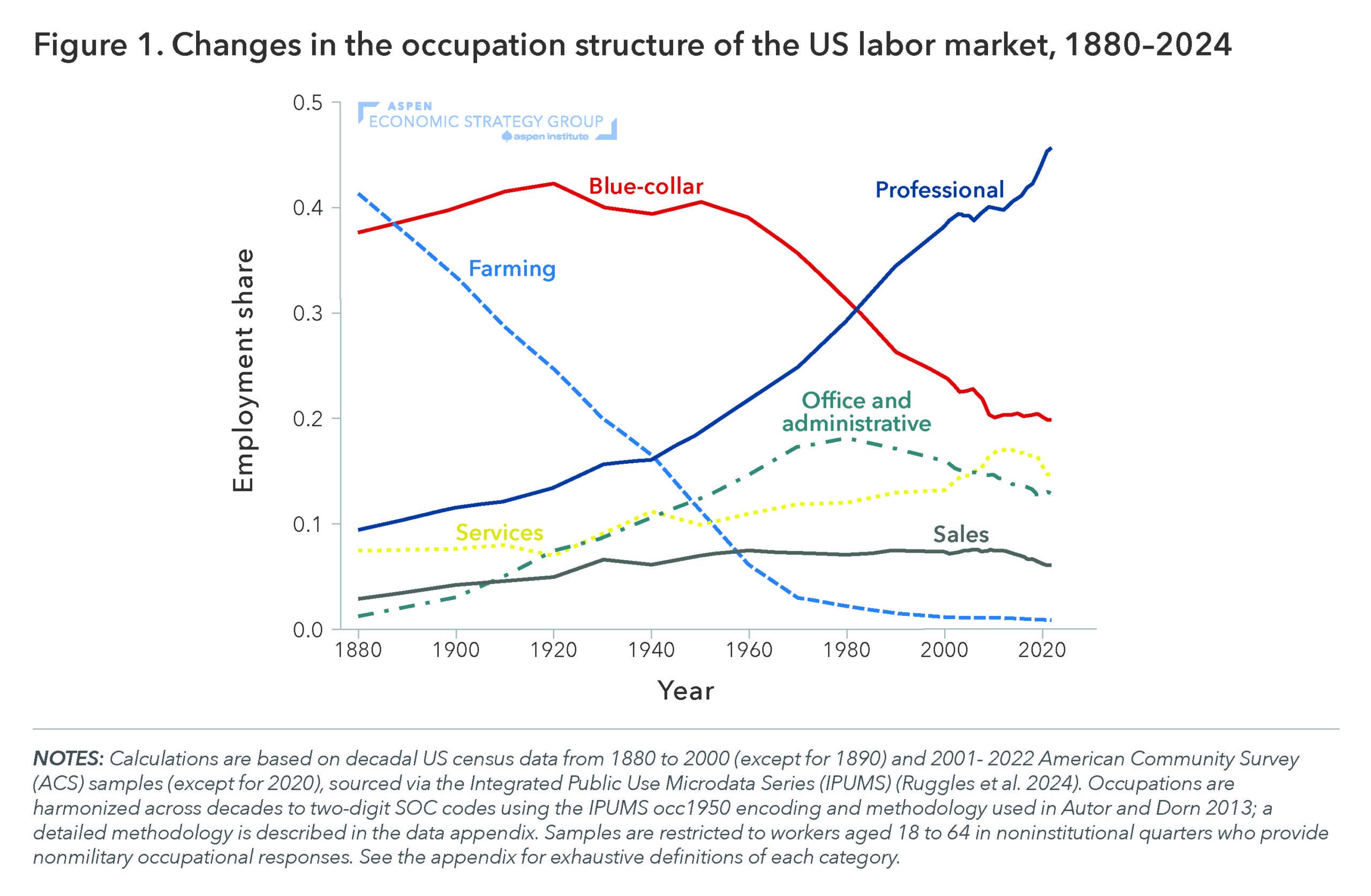
This paper explores past episodes of technological disruption in the US labor market, with the goal of learning lessons about the likely future impact of artificial intelligence (AI). The authors measure changes in the structure of the US labor market going back over a century in two ways. First, they examine the relative frequencies of occupations from 1880-2020. Over that period, the structure of the US labor market underwent two large shifts: 

  1. From 1880 to 1960, workers moved out of agriculture jobs. In 1880, 41 percent of all workers in the US economy were employed as farmers or farm laborers. This share fell consistently by 4 percentage points per decade, and by 1960 only 6 percent of US employment was in agriculture. 
  2. From 1960 to 1980, jobs moved from the factory to the office. The share of workers employed in blue-collar jobs like manual labor, construction, production and manufacturing, transportation, and maintenance and repair remained relatively constant at 40 percent from 1880 to 1960, then fell ten percentage points by 1980. It has experienced a slower decline since, reaching 20 percent by 2010.

They also find that the pace of change, as measured by occupational churn, has slowed over time: the years spanning 1990 to 2017 were less disruptive than any prior period we measure, going back to 1880. This comparative decline is not because the job market is stable today but rather because past changes were so profound. 

These changes were caused by general-purpose technologies (GPTs), like steam power and electricity, which dramatically disrupted the twentieth-century labor market over the course of several decades. The authors argue that AI could be a GPT on the scale of prior disruptive innovations and suggest that there are two patterns in the data that might indicate that AI is leading to labor market disruptions along the lines of past GPTs. First, increased investment in new technologies and a J-curve pattern of productivity growth in AI-exposed sectors. Second, large but steady declines in employment share for AI-exposed jobs, especially jobs in sectors where consumers don’t increase consumption with rising income. They present early evidence of such signs in four stylized facts:

  1. The labor market is no longer polarizing— employment in low- and middle-paid occupations has declined, while highly paid employment has grown. 
  2. Employment growth has stalled in low-paid service jobs. 
  3. The share of employment in STEM jobs has increased by more than 50 percent since 2010, fueled by growth in software and computer-related occupations. 
  4. Retail sales employment has declined by 25 percent in the last decade, likely because of technological improvements in online retail. 

The authors conclude that, with respect to white collar-jobs, AI will contribute to the ongoing decline in back-office administrative jobs and rise in management and business operations occupations. As AI technology improves, innovations like pricing algorithms and automated scheduling may lead to declining employment in sales and administrative-support occupations. On the other hand, while AI helps with certain tasks of professional and managerial workers, the demand for good ideas and cogent analysis of complex counterfactual thought experiments may be nearly unlimited. In this way, at least in the near term, AI is more likely to ratchet up firms’ expectations of knowledge workers than it is to replace them.

Suggested Citation: Deming, David, Christopher Ong, and Lawrence H. Summers. 2024. “Technological Disruption in the US Labor Market” In Strengthening America’s Economic Dynamism, edited by Melissa S. Kearney and Luke Pardue. Washington, DC: Aspen Institute. https://doi.org/10.5281/zenodo.13973975.

Protectionism is Failing and Wrongheaded: An Evaluation of the Post-2017 Shift toward Trade Wars and Industrial Policy

Download Paper Executive Summary

This paper evaluates the shift towards increasingly protectionist and nationalist policies carried out by the past two presidential administrations. In this paper, Michael Strain argues that the turn to such economic policies has not only been ineffective by its own standards, failing to raise employment and reduce America’s reliance on China, but also is more fundamentally misguided. Strain makes three central arguments about the efficacy of these increasingly insular economic policies. 

1. Protectionism Has Not Met Its Own Goals

The 2018-2019 tariffs likely reduced manufacturing employment. Increased prices of intermediary goods and retaliatory tariffs outweighed the protection from import competition, leading to net reductions in manufacturing employment. Research shows that industries more exposed to tariff increases experienced greater declines in employment. Beyond the manufacturing sector, counties with higher exposure to tariffs experienced higher unemployment rates.

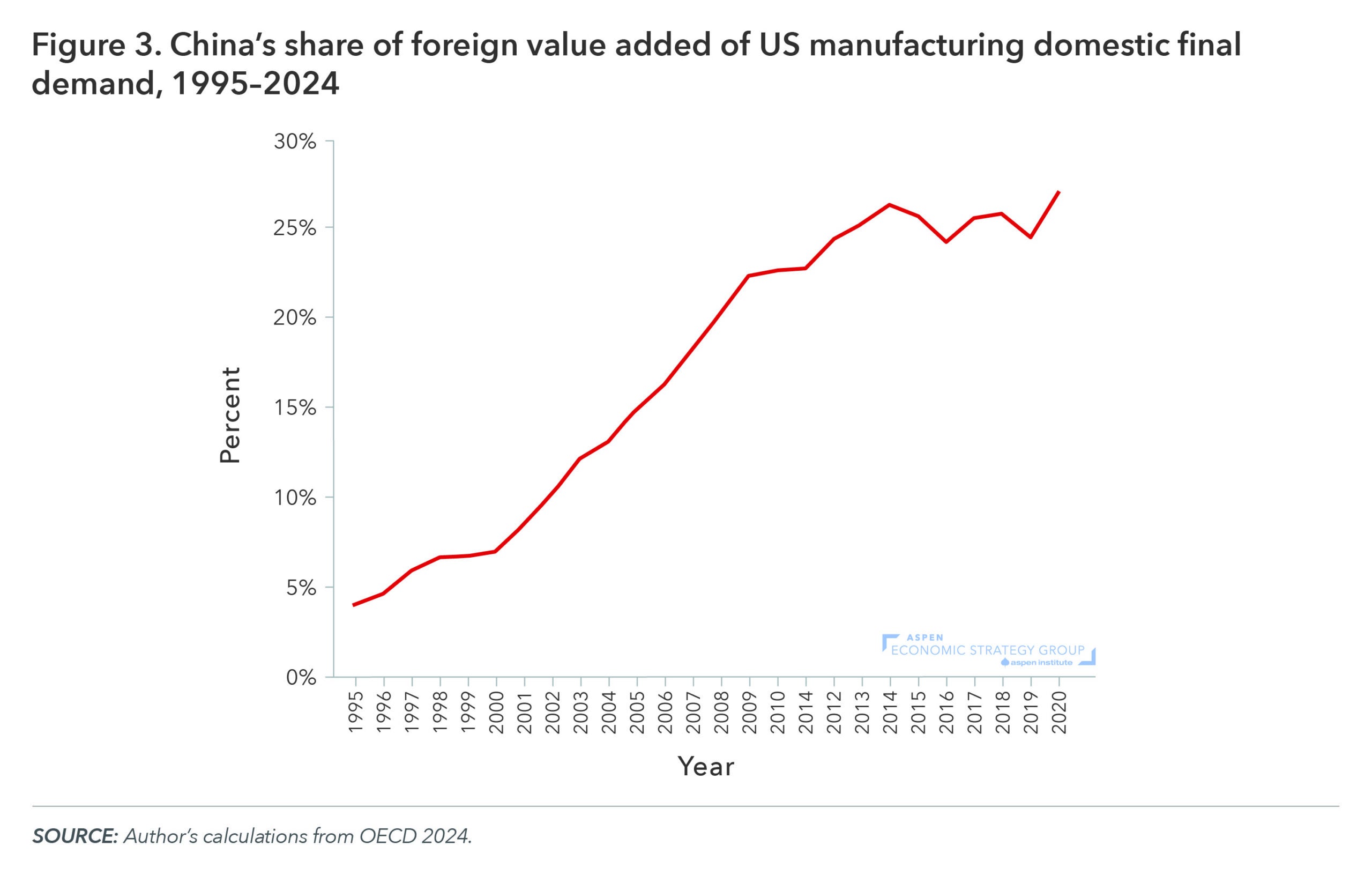
Post-2017 protectionism failed to reduce the US trade deficit, despite it being a primary goal of the Trump administration. The current account deficit rose from $85.5 billion when President Trump took office to $180 billion at the end of his term. Furthermore, many Chinese manufacturers rerouted goods through other nations, such as Mexico and Vietnam, to evade US tariffs. Thus, China’s “value-added” to US domestic final demand rose over the period, making the policy unsuccessful in reducing US reliance on Chinese imports. 

2. Protectionism is Wrongheaded

Strain argues that the goal of significantly increasing manufacturing employment is inherently misguided, as the decline in US manufacturing jobs largely reflects a productivity increase. Although these productivity gains have been accompanied by disruptions, they also have created new opportunities. Policymakers should focus on doing more to help affected workers access these new opportunities rather than trying to turn back the clock. 

Strain notes that trade creates both winners and losers by affecting the composition of jobs in the labor market, but should not affect the aggregate level of employment. Trade between nations allows a given country to specialize in the production of those goods and services for which that nation has a comparative advantage, and to trade to receive and consume other goods and services. However, trade is not about jobs, per se. Rather, trade is about productivity, wages, and consumption.

3. Industrial Policy is (almost) Always Bad Policy

Strain makes a case against the recent turn to policies that favor specific domestic industries, as most of these policy efforts have multiple, competing objectives and are unlikely to yield public benefits that exceed the public costs. Instead, to advance American innovation, the government should invest public funds in basic research and infrastructure. The goal of this investment should not be to create manufacturing jobs and should not target specific products or sectors, but should instead be focused on increasing innovation and dynamism more broadly, which will in turn increase productivity and wage growth. 

Suggested Citation: Strain, Michael R., 2024. “Protectionism is Failing and Wrongheaded: An Evaluation of the Post-2017 Shift toward Trade Wars and Industrial Policy” In Strengthening America’s Economic Dynamism, edited by Melissa S. Kearney and Luke Pardue. Washington, DC: Aspen Institute. https://doi.org/10.5281/zenodo.13974079.

The Widening Economic and Social Gaps Between Young Men and Women

Recent social and economic data has revealed a troubling trend: young men in the US are increasingly falling behind their female peers, a long-widening gap that has accelerated in the wake of COVID-19. Many young men have struggled to navigate the disruptions associated with the pandemic, resulting in stagnating labor force participation rates, declining college enrollment, and increased social isolation.

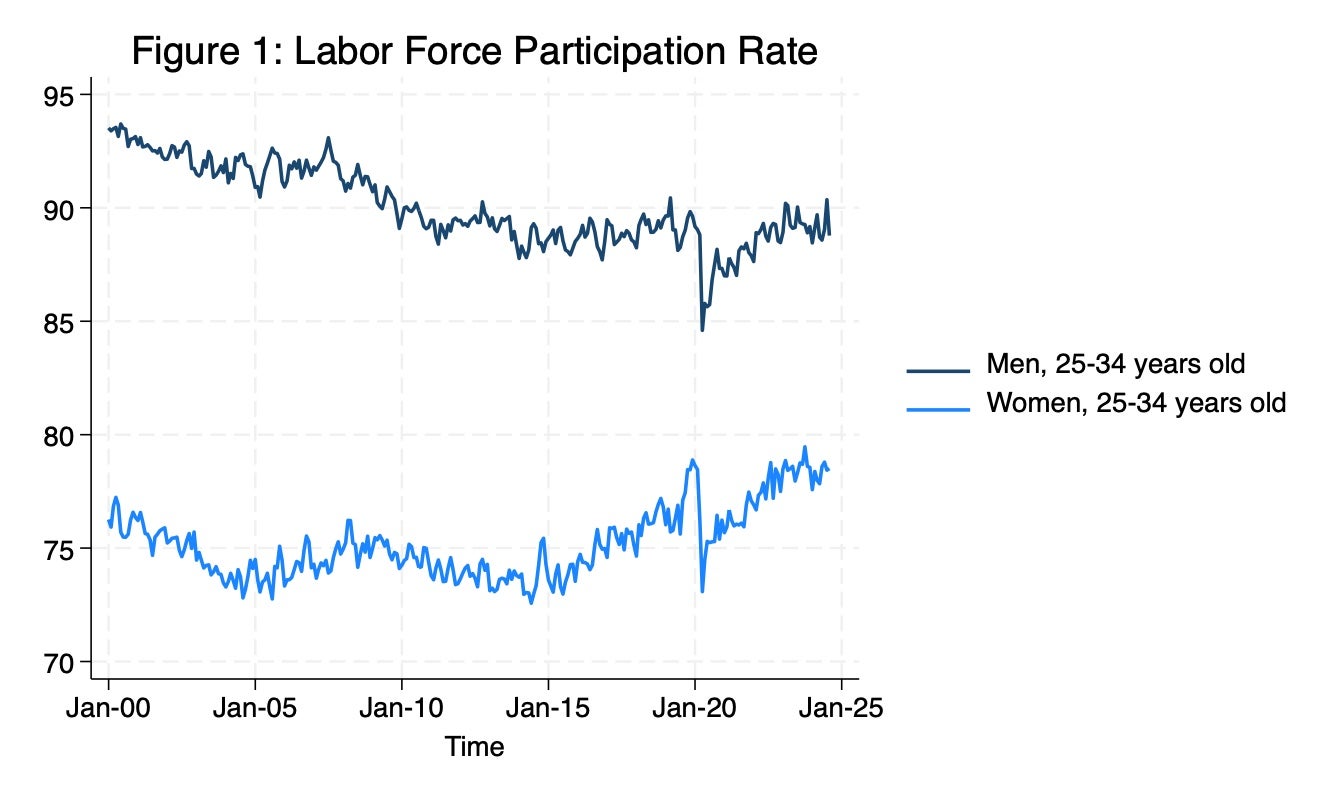
This phenomenon is part of a longer trend of young men’s declining labor force participation. As shown in Figure 1, the average share of men 25-34 years old employed or looking for work has dropped from 92.4 percent twenty years ago, in August 2004, to 88.8 percent in August 2024. If labor force participation among young men today matched its August 2004 rate, over 700,000 more men would be in the workforce. On the other hand, over that same time, women’s labor force participation has risen from 72.8% to 78.5%

The decrease in labor force attachment comes at the same time as a significant drop in college enrollment after the pandemic, a trend highlighted in a previous AESG In Brief. Among men who had just graduated high school, just 55% enrolled in college in 2021, down from 62% in 2019, while these rates remained at 70% across this period for women. The most recent data indicates that men’s college enrollment rates have not yet recovered from their post-pandemic drop.

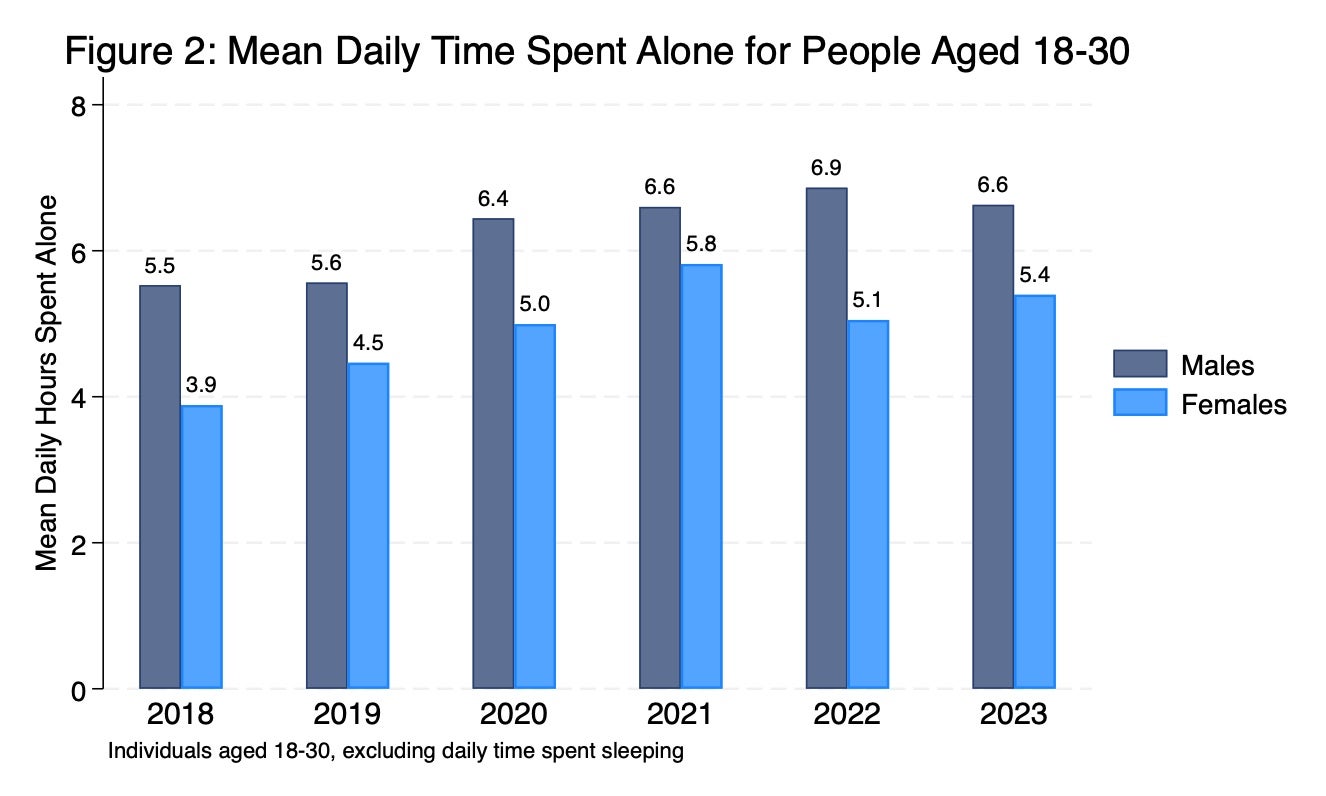
As young men are less likely to join the workforce or enroll in school, they are lives of increased isolation. As shown in Figure 2, men spend an average of 6.6 non-sleeping hours alone each day, compared to 5.4 hours for women. This represents an increase of over one hour spent alone daily compared to pre-pandemic figures. This increased isolation contributes to weakened labor market prospects through a narrowing of social networks.

The declines in young men’s academic progress and social connectedness experienced during the pandemic could spell further worsening in labor market outcomes. In their 2019 AESG paper A Policymakers Guide to Labor Force Participation, Keith Hennessey and Bruce Reed highlight that men with lower levels of education have experienced the largest declines in labor market prospects from 1965-2019, as technological disruptions and competition from low-wage overseas workers reduced economic opportunities for non-college educated men. Over that time, labor force participation among men with a high school degree but no college experience fell by 14 percentage points, compared to a 4 percentage point drop among men with a bachelor’s degree. 

Helping young men today overcome the acute, pandemic-related disruptions they experienced just as they entered adulthood will take significant and widespread investments. Such efforts include ensuring those who want to enter college after pandemic-related disruptions are able to do so, restoring pathways to economic security outside of the college pipeline, and equipping young men with the social and emotional support to navigate this period in their lives  – but these investments will be crucial to building a productive, economically secure next generation.