Luke Pardue is Policy Director at the Aspen Institute’s Economic Strategy Group (AESG). He obtained his PhD in economics from the University of Maryland and, before joining AESG, worked as an economist at Gusto, a small business payroll platform. Before Gusto, Luke held research positions at the US Census Bureau and Federal Reserve Board. His research focuses on finding policies and practices that help businesses, workers, and families thrive. His work and commentary have been featured in outlets including the New York Times, Washington Post and Wall Street Journal. Luke currently lives in Washington, DC.
Melissa S. Kearney
Amanda Starc

AMANDA STARC, Ph.D., is an Associate Professor of Strategy at the Kellogg School of Management and a Faculty Research Fellow at the National Bureau of Economic Research (NBER). She received her BA in Economics from Case Western Reserve University, and her PhD in Business Economics from Harvard University. Dr. Starc’s research agenda sits at the intersection of industrial organization and health economics. Her research spans three main themes. First, she studies the fundamental economic question of what health insurance covers and how it is priced. Second, she studies how information shapes consumer demand for both insurance and health care. Finally, she studies the efficacy of market mechanisms in allocating goods and services in health care markets.
Adi Sunderam
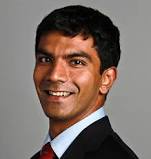
ADI SUNDERAM is a professor of business administration in the Finance Unit and a Research Associate at the National Bureau of Economic Research. He teaches Investment Management in the MBA elective curriculum and Ph.D. courses in Corporate Finance and Empirical Methods. Professor Sunderam holds a Ph.D. in business economics and an A.B. in computer science and economics, both from Harvard University. In 2009 and 2010, he served in the U.S. Treasury Department as a special assistant and liaison to the White House National Economic Council. Professor Sunderam’s research interests are in corporate finance, asset pricing, and financial intermediation. His work focuses on the organization of financial markets and its effect on asset prices and corporate investment. It has appeared in the Quarterly Journal of Economics, the American Economic Review, the Journal of Finance, the Journal of Financial Economics, and the Review of Financial Studies. He serves as an associate editor for the Journal of Finance.
Alan D. Viard

ALAN D. VIARD is a resident scholar at the American Enterprise Institute (AEI), where he studies federal tax and budget policy. Prior to joining AEI, Viard was a senior economist at the Federal Reserve Bank of Dallas and an assistant professor of economics at Ohio State University. He has also been a visiting scholar at the US Department of the Treasury’s Office of Tax Analysis, a senior economist at the White House’s Council of Economic Advisers, and a staff economist at the Joint Committee on Taxation of the US Congress. Viard has taught public finance at Georgetown University’s Public Policy Institute and he co-hosted the New York University Law School tax policy colloquium in the spring 2015 semester. Earlier in his career, Viard spent time in Japan as a visiting scholar at Osaka University’s Institute of Social and Economic Research. Viard received his Ph.D. in economics from Harvard University and a B.A. in economics from Yale University.
Amy Ganz

AMY GANZ is Chief of Staff for Jared Bernstein at the Council of Economic Advisers (CEA). Previously, she was Deputy Director of the Aspen Economic Strategy Group. She has worked in several policy research and analysis roles focused on tax policy, housing and urban policy, and state and local finance. She holds a BA in economics and political science from Wheaton College and an MPA in public policy analysis from NYU Wagner School of Public Service.
Adam Looney

ADAM LOONEY is Executive Director of the Marriner S. Eccles Institute and Professor of Finance at the David Eccles School of Business at the University of Utah and a non-resident fellow at the Brookings Institution. Previously, he was the Joseph A. Pechman senior fellow in Economic Studies at Brookings and the Director of the Center on Regulation and Markets. While at Brookings, he has been called to testify in the Congress by members of both parties on tax and student loan policy, and his research has influenced the development of federal tax policies and education reforms. Earlier, he served as Deputy Assistant Secretary for Tax Analysis at the U.S. Treasury Department. At Treasury, he advised the Secretary on economic issues related to tax policy, analyzed current and proposed legislation, and provided the official receipts forecasts and revenue estimates for the Administration’s budgets. Under his direction, the office initiated research projects on topics including business tax reform, capital gains taxation, and a carbon tax. He also studied the causes and consequences of student loan distress and the economic returns to postsecondary education, and played an instrumental role in the advancement of several data-intensive projects including the production of the Department of Education’s College Scorecard. Prior to joining the Treasury, Mr. Looney was policy director of The Hamilton Project and was a senior fellow in Economic Studies at Brookings from 2010-2013. Previously, he served as the senior economist for public finance and tax policy with President Obama’s Council of Economic Advisers and was an economist at the Federal Reserve Board. He received a Ph.D. in economics from Harvard University and a B.A. in economics from Dartmouth College.